Ventilated FIBC Bags: A Bulk Packaging Solution for Heat-Sensitive Products
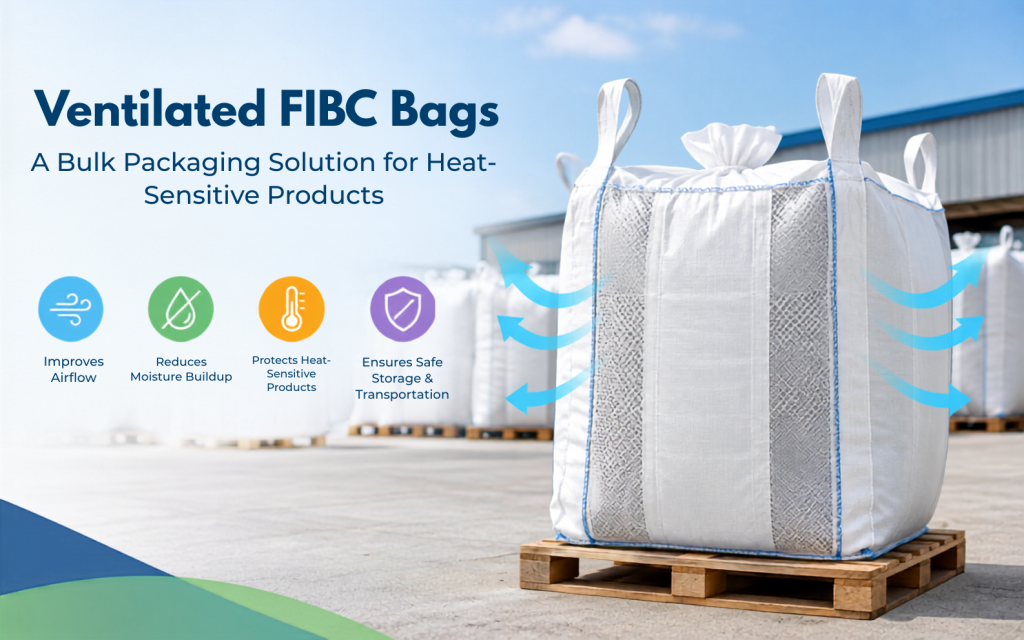
Heat, moisture, and poor airflow can turn bulk packaging into a product-quality risk, particularly for agricultural produce, biomass, nuts, and other heat-sensitive materials. Ventilated FIBC bags, also known as breathable bulk bags or ventilated jumbo bags, are engineered to address this challenge by allowing controlled air circulation through specially designed ventilation strips or mesh panels.
Why does ventilation matter in bulk packaging? Warm or moisture-releasing products can create condensation inside conventional FIBC bags, increasing the risk of mould, spoilage, softening, and quality deterioration during storage and transportation.
Industry adoption is expanding across agriculture, food processing, and other bulk-handling applications. Polypropylene remains the dominant material because it combines strength, lightweight construction, durability, and cost efficiency.
In this guide, we explain what ventilated FIBC bags are, how they work, their benefits, applications, capacity options, and how to choose the right breathable bulk packaging solution for heat-sensitive products.
What Are Ventilated FIBC Bags?
Ventilated FIBC bags are flexible intermediate bulk containers made from woven polypropylene fabric with specially designed ventilation panels, strips, or mesh sections. Unlike standard bulk bags, they promote airflow around the packed material, helping regulate heat and reduce moisture accumulation.
These breathable FIBC bags are particularly suitable for products that generate heat or require air circulation during storage and transportation. Common applications include agricultural produce, firewood, biomass, nuts, and other moisture-sensitive bulk materials where maintaining product quality is essential.
Why Heat and Moisture Can Become a Problem in Bulk Packaging?
Heat and moisture management is critical when storing or transporting bulk materials. Without adequate airflow, conditions inside an FIBC can gradually affect product quality and shelf life.
-
Heat Build-Up Inside Bulk Bags
Products such as fresh produce, biomass, nuts, and agricultural materials can generate or retain heat during storage. In tightly packed conventional FIBC bags, limited air movement can trap this heat, potentially accelerating deterioration and reducing product quality.
-
Condensation and Moisture Accumulation
Temperature differences can cause condensation to form inside bulk bags. Excess moisture creates a favourable environment for mould, microbial growth, clumping, and spoilage, particularly in moisture-sensitive materials.
For these applications, ventilated FIBC bags provide improved airflow, helping manage internal heat and moisture more effectively.
How Ventilated FIBC Bags Help Heat-Sensitive Products?
Ventilated FIBC bags are designed to improve airflow around heat-sensitive bulk products, making them useful where conventional jumbo bags may restrict ventilation.
1. Improved Air Circulation
Ventilation panels allow air to move through the bag, helping dissipate retained heat and maintain more suitable storage conditions.
2. Reduced Moisture Accumulation
Better airflow can reduce moisture build-up and condensation, particularly when products release heat or moisture during handling.
3. Better Product Freshness
For agricultural produce and other sensitive materials, improved ventilation helps maintain quality and freshness for longer periods.
4. Reduced Risk of Mold and Spoilage
Lower moisture levels can help reduce conditions that encourage mould growth, clumping, and spoilage.
5. Improved Storage and Transportation Efficiency
By supporting better product conditions during transit and storage, ventilated FIBC bags can help reduce handling losses and improve bulk packaging efficiency.
Overall, they offer a practical bulk packaging solution for businesses handling products where airflow, freshness, and moisture control directly influence quality.
Key Applications of Ventilated FIBC Bags
Ventilated FIBC bags are widely used where bulk products need better airflow during storage, handling, and transportation. Their breathable construction makes them particularly suitable for commodities that can generate heat or require moisture management.
a) Potatoes
Ventilated bulk bags help potatoes maintain airflow after harvesting, reducing heat and moisture accumulation that can contribute to quality deterioration.
b) Onions
Onions benefit from breathable FIBC packaging because continuous air circulation helps limit condensation and supports better storage conditions.
c) Garlic and Root Vegetables
Garlic, carrots, beets, and similar root vegetables can be packed in ventilated jumbo bags to encourage airflow and reduce moisture-related spoilage.
d) Firewood and Wood Products
Ventilated FIBC bags are suitable for firewood, wood chips, and similar products where trapped moisture can affect drying and storage.
d) Agricultural Produce
Farmers and bulk handlers use ventilated bags for various agricultural commodities requiring airflow during transportation and warehousing.
e) Cocoa Beans and Similar Commodities
Cocoa beans and other moisture-sensitive commodities can benefit from breathable bulk packaging, helping manage internal humidity and protect product quality throughout the supply chain.
Benefits of Using Ventilated FIBC Bags for Bulk Packaging
Ventilated FIBC bags offer a practical packaging solution for bulk products that require airflow and moisture management. Their construction combines the handling advantages of standard bulk bags with ventilation features designed for specific storage and transportation needs.
i) Better Airflow and Moisture Control
Ventilated FIBC bags allow improved air circulation around the packed material. This can help release retained heat and reduce moisture accumulation, particularly for agricultural produce, firewood, biomass, and other breathable commodities. Better airflow may also lower the risk of condensation when temperature and humidity conditions fluctuate.
ii) Support for Product Quality
By managing airflow and moisture more effectively, these bulk bags can support product freshness and reduce spoilage risk in appropriate applications. They are especially useful when poor ventilation could contribute to mould growth, deterioration, or quality loss.
iii) Efficient Bulk Handling
FIBC bags are designed for efficient filling, lifting, stacking, storage, and transportation. Their high load capacity allows businesses to move substantial quantities using fewer individual packages, potentially improving warehouse and logistics efficiency.
iv) Customizable Construction
Ventilated FIBC bags can be customized according to product and handling requirements. Options may include different bag dimensions, lifting loops, discharge configurations, ventilation patterns, fabric specifications, and load capacities.
v) Easier Transportation and Storage
Their flexible construction makes them convenient for bulk transportation across warehouses, farms, processing facilities, and distribution networks. When properly specified, their stackable and space-efficient design can also contribute to better storage utilization.
Overall, ventilated FIBC bags provide a balance of airflow, moisture management, durability, load capacity, and handling efficiency, making them valuable for bulk packaging applications where product condition matters.
Conclusion:
Ventilated FIBC bags provide an effective bulk packaging solution for products that require better airflow, moisture management, and protection during storage and transportation. By supporting air circulation, these bags can help manage heat build-up, reduce condensation, and lower spoilage risks in suitable applications such as potatoes, onions, agricultural produce, firewood, and cocoa beans.
For businesses looking to improve bulk handling without compromising product quality, selecting the right FIBC construction, fabric, ventilation pattern, and load capacity is essential. SatyendraPackagingLtd. offers customized FIBC packaging solutions designed around specific product and supply-chain requirements. Contact SatyendraPackagingLtd. to discuss your bulk packaging needs and identify a suitable ventilated FIBC bag configuration for your application.
When properly specified and used under appropriate storage conditions, ventilated FIBC bags can improve handling efficiency while supporting better product quality throughout the logistics cycle.
Recent Blogs
- Top Reasons to Source FIBC Bags from Indian Manufacturers
- BOPP Packaging Film vs CPP vs PET Film: Which Packaging Material Wins?
- PP Woven Bags for Packaging: Types, Uses, Benefits & Manufacturing Process
- Top UV Masterbatch Manufacturer for Agriculture & Industrial Applications
- FIBC Bulk Bags Unloading Guide: Essential Equipment, Safety Checks, and Techniques
- Super Sack Bags Guide: Sizes, Materials, Capacity, and Industrial Uses
- The Ultimate Guide to Tunnel Bags for Cement and Construction Industry
- Non Woven Bags: A Smart Packaging Move That Boosts Sales & Sustainability
- FIBC Jumbo Bags Handling Guide: 8 Expert Tips to Prevent Accidents & Loss
- Woven Polypropylene vs. Paper Bags: Which is Best for Heavy-Duty Industrial Use
- What Is Masterbatch? Types, Advantages, and Role in Plastic Industry
- Ventilated Bulk Bags Explained: Design, Durability, and Real-World Applications
- Pinch Bottom Bags: Why Brands Are Switching to This Smart Packaging?
- FIBC vs. Rigid Containers: Which One Delivers Better ROI for Bulk Transport?
- The Rise of Flexible Packaging: What Manufacturers and Startups Must Know
- What Is PP Multifilament Yarn? Benefits, Uses, and Industry Applications
- Polypropylene (PP): Uses, Benefits, and Applications in Packaging Industry
- Leno Bags: A Stronger Packaging Backbone for India’s Farm Produce Market
- The Ultimate Guide to Choosing the Geotextile Fabric for Your Project
- Top 6 Best Packaging Materials for Bulk Goods: Strong & Sustainable
- What is Flexible Packaging? The Smart Choice for FMCG Export & Supply
- Complete Guide to FIBC Bags – Types, Uses, and Benefits You Should Know
- BOPP Laminated Woven Bags Benefits | Satyendra Packaging
- Innovative BOPP Film | Satyendra Packaging Ltd Manufacturing
- BOPP Pinch Bottom Bags | Reliable Custom Packaging
- BOPP Laminated PP Woven Sacks | Durable Custom Packaging
- Leno Bags for Fresh Produce – Breathable & Durable Packs
- PP Woven Fabric: Meaning, Properties & Applications Guide
- FIBC Jumbo Bags: Uses, Benefits & More | Satyendra Packaging
- Top 5 Benefits of Woven Geotextile Fabrics in Roads
- High-Quality BOPP Film Packaging | Satyendra Packaging India
- Are BOPP Films Safe for Food Packaging? | Satyendra Group
- Are FIBCs Recyclable? A Guide to Sustainable Bulk Bags
- BOPP/PP Block Bottom Bags: Types, Benefits & Industry Uses
- Why PP Multifilament Yarn is Essential for Multiple Industries
- Boost Your Business with BOPP Bags
- Knitted Geotextiles: Game-Changer in Civil Engineering Solutions
- How Flexible Packaging Solutions Help to Grow Business
- FIBC Bags: The Versatile Solution for Bulk Material Handling
- Types of Flexible Packaging and Their Advantages
- Reasons Why PP Leno Mesh Bags Are the Best Choice for Produce Packaging
- Why BOPP Laminated PP Woven Bags Are Right For Your Business?
- Woven Polypropylene Bags: The Complete Guide
- Exploring the Benefits of FIBC Bulk Bags: A Practical Guide