Non Woven Bags: A Smart Packaging Move That Boosts Sales & Sustainability
Non woven bags are no longer just a budget-friendly packaging option—they’ve quietly become a powerful business tool. With India generating over 3.4 million tonnes of plastic waste annually, and multiple state-level bans tightening enforcement, brands are under real pressure to rethink packaging. But here’s the interesting part—can a simple bag actually influence buying decisions and brand recall? The answer is increasingly yes.
Consumers today don’t just carry products; they carry brands. A study by the India Brand Equity Foundation (IBEF) highlights how the retail sector is rapidly shifting toward sustainable alternatives, while global reports suggest the non woven bags market is projected to cross USD 10 billion by the end of the decade. That’s not a trend—it’s a shift.
Non woven bags, with their reusable and eco-friendly appeal, turn everyday customers into moving brand ambassadors. For businesses, this means better visibility, stronger perception, and a smarter way to align sustainability with sales growth—all without significantly increasing packaging costs.
Why Non Woven Bags Are Gaining Popularity in India?
Non woven bags are quickly becoming a go-to packaging choice across India, while PP woven bags continue to gain strong demand across multiple industries. The reasons go far beyond just cost. A mix of government pressure, evolving customer expectations, and industry-wide adoption is driving this visible shift. What once felt like an alternative is now becoming the standard.
a) Government Regulations on Plastic
India’s increasing crackdown on single-use plastics has pushed businesses to rethink their packaging strategies. With bans implemented in several states and stricter compliance checks, non woven bags provide a practical, regulation-friendly solution without disrupting supply chains.
b) Changing Consumer Behavior
Modern consumers are more aware than ever. They prefer brands that reflect sustainability and responsibility. A reusable non woven bag not only adds convenience but also builds trust, making customers more likely to return.
c) Retail & FMCG Industry Adoption
From large retail chains to local kirana stores, adoption is growing fast. Businesses value non woven bags for their strength, print quality, and branding potential.
This growing acceptance clearly signals a long-term packaging transformation.
Key Benefits of Non Woven Bags for Businesses
Non woven bags have evolved into a smart packaging investment, offering multiple advantages that directly support business growth and brand visibility.
a) Cost-Effective Branding Tool
Unlike one-time packaging, non woven bags continue to promote your brand long after the purchase. Every reuse acts as free advertising, making them a highly cost-effective branding tool compared to traditional carry bags.
b) Durable and Reusable
Strength is one of their biggest advantages. Non woven bags can handle heavier loads and repeated use, which enhances customer convenience. A durable bag reflects positively on your brand, showing quality and reliability in every interaction.
c) Customization & Design Flexibility
From vibrant prints to minimal aesthetics, non woven bags offer excellent design flexibility. Businesses can easily align packaging with their brand identity through colors, logos, and messaging, creating a consistent and memorable visual presence.
d) Eco-Friendly Appeal
With sustainability becoming a key buying factor, these bags help brands position themselves as responsible and future-ready. Their reusable and recyclable nature reduces environmental impact while appealing to eco-conscious consumers.
When combined, these benefits make non woven bags more than just packaging—they become a strategic tool for branding, customer retention, and long-term business value.
Types of Non Woven Bags Available
Non woven bags come in a variety of styles, each designed to serve different business needs and customer preferences. Choosing the right type of packaging manufacturer can enhance both usability and brand perception.
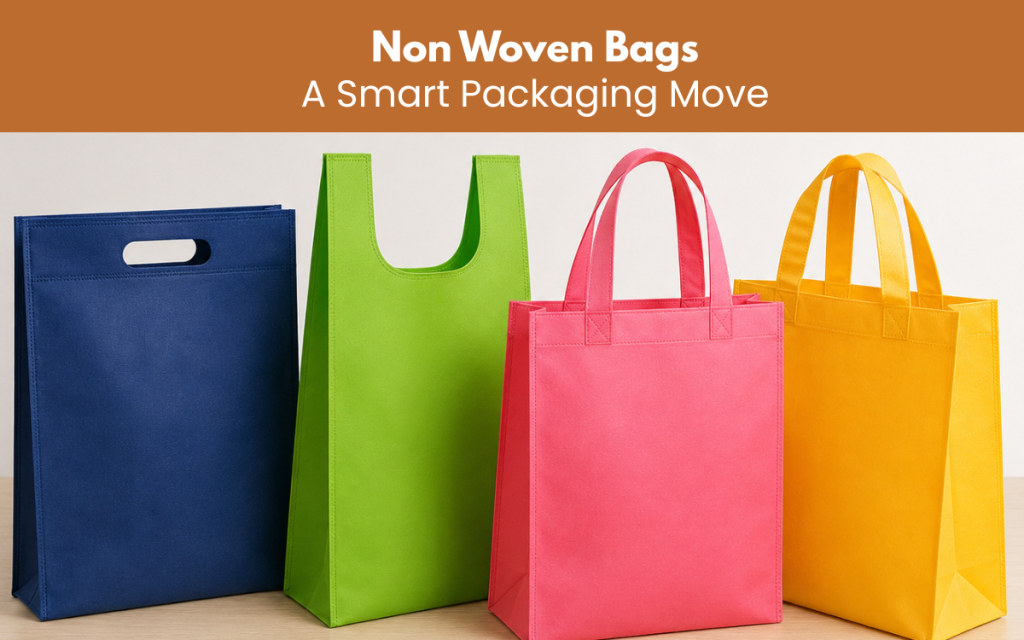
a) D-Cut Bags
D-cut bags are one of the most commonly used options, especially in retail stores. They feature a simple die-cut handle, making them lightweight, cost-effective, and easy to carry. Ideal for quick purchases and high-volume usage.
b) W-Cut Bags
W-cut bags offer a wider opening and better load distribution. Their design allows customers to comfortably carry slightly heavier items, making them suitable for grocery stores and general retail packaging.
c) Loop Handle Bags
Loop handle bags provide a more premium look and feel. The stitched handles add strength and comfort, which makes them perfect for fashion stores, exhibitions, and branded promotions where presentation matters.
d) Box Bags
Box bags come with a structured base and extra space, allowing them to hold bulkier products. They are widely used in supermarkets and for larger purchases, offering both durability and convenience.
Each type serves a unique purpose, helping businesses match packaging with product type and customer expectations.
How to Choose the Right Non Woven Bag Supplier?
Choosing the right non woven bag supplier is not just about pricing—it directly impacts your brand image, packaging quality, and customer experience. A reliable supplier ensures consistency, durability, and timely execution, all of which matter in a competitive market.
a) Check Quality and GSM of Fabric
Start by understanding the fabric strength. GSM (grams per square meter) defines thickness and durability. Higher GSM bags are sturdier and suitable for heavy items, while lower GSM works for lightweight use. Always ask for samples before finalizing.
b) Evaluate Printing Capabilities
Your packaging reflects your brand, so printing quality is crucial. Check whether the supplier offers screen printing, offset, or advanced techniques. Clear, long-lasting prints ensure your branding stays visible even after multiple uses.
c) Look for Bulk Pricing Options
Cost efficiency plays a big role, especially for large-scale businesses. Compare bulk pricing, discounts, and long-term supply benefits. A good supplier will offer competitive rates without compromising quality.
d) Ensure Timely Delivery
Delays in packaging can disrupt your entire supply chain. Confirm production timelines, order capacity, and logistics support to ensure consistent and timely deliveries.
e) Review Past Client Work
Always check previous projects, client portfolios, or testimonials. This gives a clear idea of the supplier’s reliability, design capability, and overall service quality.
A well-chosen supplier becomes a long-term partner, helping your brand maintain quality, consistency, and growth through effective packaging.
Conclusion:
Non woven bags have clearly moved beyond being just an alternative—they are now a strategic packaging choice for businesses aiming to balance cost, branding, and sustainability. As market dynamics shift and consumers become more conscious, brands that adopt smarter packaging solutions naturally stand out. From improving visibility to building an eco-friendly image, the impact goes far beyond the point of sale.
If you’re planning to upgrade your packaging approach, this is the right time to act. Partnering with Satyendra Packaging Ltd. (SPL) can help you access high-quality, customizable non woven bags designed to match your brand identity and business goals.
The real advantage lies in consistency—consistent quality, consistent branding, and consistent customer recall. Non woven bags deliver all three while supporting environmental responsibility.
Businesses that adapt early are the ones that lead. Choosing non woven bags today is not just a packaging decision—it’s a smart step toward long-term growth and sustainable success.
Recent Blogs
- Ventilated FIBC Bags: A Bulk Packaging Solution for Heat-Sensitive Products
- Top Reasons to Source FIBC Bags from Indian Manufacturers
- BOPP Packaging Film vs CPP vs PET Film: Which Packaging Material Wins?
- PP Woven Bags for Packaging: Types, Uses, Benefits & Manufacturing Process
- Top UV Masterbatch Manufacturer for Agriculture & Industrial Applications
- FIBC Bulk Bags Unloading Guide: Essential Equipment, Safety Checks, and Techniques
- Super Sack Bags Guide: Sizes, Materials, Capacity, and Industrial Uses
- The Ultimate Guide to Tunnel Bags for Cement and Construction Industry
- FIBC Jumbo Bags Handling Guide: 8 Expert Tips to Prevent Accidents & Loss
- Woven Polypropylene vs. Paper Bags: Which is Best for Heavy-Duty Industrial Use
- What Is Masterbatch? Types, Advantages, and Role in Plastic Industry
- Ventilated Bulk Bags Explained: Design, Durability, and Real-World Applications
- Pinch Bottom Bags: Why Brands Are Switching to This Smart Packaging?
- FIBC vs. Rigid Containers: Which One Delivers Better ROI for Bulk Transport?
- The Rise of Flexible Packaging: What Manufacturers and Startups Must Know
- What Is PP Multifilament Yarn? Benefits, Uses, and Industry Applications
- Polypropylene (PP): Uses, Benefits, and Applications in Packaging Industry
- Leno Bags: A Stronger Packaging Backbone for India’s Farm Produce Market
- The Ultimate Guide to Choosing the Geotextile Fabric for Your Project
- Top 6 Best Packaging Materials for Bulk Goods: Strong & Sustainable
- What is Flexible Packaging? The Smart Choice for FMCG Export & Supply
- Complete Guide to FIBC Bags – Types, Uses, and Benefits You Should Know
- BOPP Laminated Woven Bags Benefits | Satyendra Packaging
- Innovative BOPP Film | Satyendra Packaging Ltd Manufacturing
- BOPP Pinch Bottom Bags | Reliable Custom Packaging
- BOPP Laminated PP Woven Sacks | Durable Custom Packaging
- Leno Bags for Fresh Produce – Breathable & Durable Packs
- PP Woven Fabric: Meaning, Properties & Applications Guide
- FIBC Jumbo Bags: Uses, Benefits & More | Satyendra Packaging
- Top 5 Benefits of Woven Geotextile Fabrics in Roads
- High-Quality BOPP Film Packaging | Satyendra Packaging India
- Are BOPP Films Safe for Food Packaging? | Satyendra Group
- Are FIBCs Recyclable? A Guide to Sustainable Bulk Bags
- BOPP/PP Block Bottom Bags: Types, Benefits & Industry Uses
- Why PP Multifilament Yarn is Essential for Multiple Industries
- Boost Your Business with BOPP Bags
- Knitted Geotextiles: Game-Changer in Civil Engineering Solutions
- How Flexible Packaging Solutions Help to Grow Business
- FIBC Bags: The Versatile Solution for Bulk Material Handling
- Types of Flexible Packaging and Their Advantages
- Reasons Why PP Leno Mesh Bags Are the Best Choice for Produce Packaging
- Why BOPP Laminated PP Woven Bags Are Right For Your Business?
- Woven Polypropylene Bags: The Complete Guide
- Exploring the Benefits of FIBC Bulk Bags: A Practical Guide