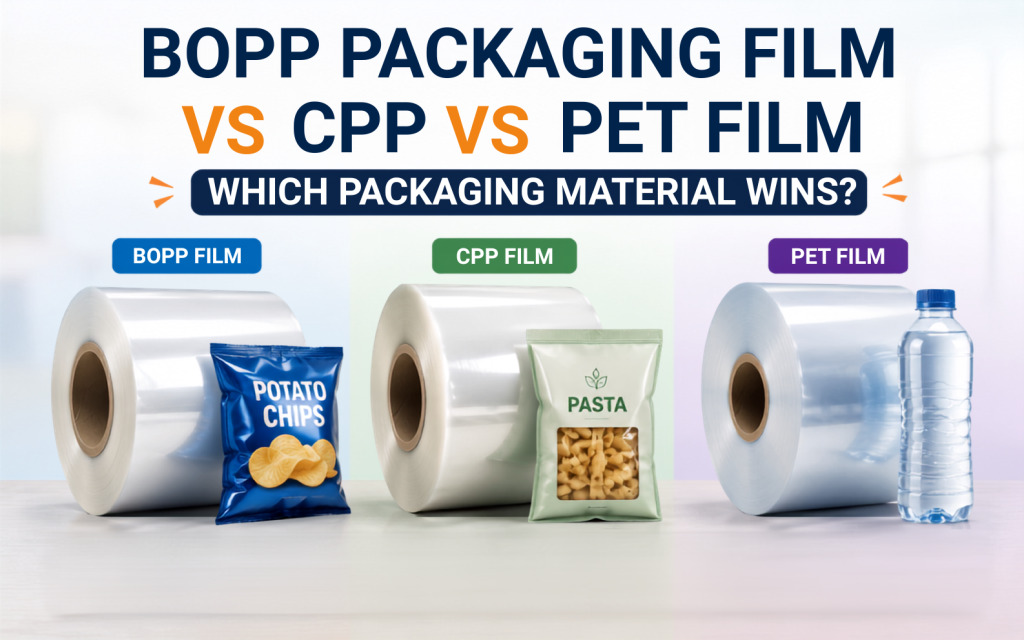
BOPP Packaging Film vs CPP vs PET Film: Which Packaging Material Wins?
Choosing between BOPP packaging film, CPP film, and PET film isn't just about picking a plastic film. It directly impacts product freshness, packaging speed, print quality, transportation safety, and overall packaging cost.
If you're wondering which packaging material performs best, the answer depends on your product, sealing method, barrier requirements, and end-use application. BOPP excels in printability and affordability, CPP stands out for heat sealing and flexibility, while PET offers unmatched strength and high-temperature resistance.
Every packaging material has a purpose, but using the wrong one can increase production costs, reduce shelf life, or even affect customer perception. That is why packaging engineers and manufacturers evaluate film performance before finalizing a packaging structure.
In this guide, we'll compare BOPP packaging film vs CPP vs PET film across key parameters such as mechanical strength, moisture barrier, transparency, sealing performance, recyclability, applications, and pricing. By the end, you'll know exactly which packaging film delivers the right balance of protection, performance, and commercial value for your products.
What is Packaging Film?
Packaging film is a thin, flexible material used to protect, preserve, and present products throughout storage, transportation, and retail display. Made from polymers like BOPP, CPP, PET, PE, and PVC, packaging films provide essential properties such as moisture resistance, oxygen barrier, heat sealability, durability, and high-quality printability. They are widely used across food, beverages, pharmaceuticals, cosmetics, agriculture, and consumer goods industries to extend shelf life, improve product safety, enhance branding, and support efficient packaging operations.
What is BOPP Packaging Film?
BOPP (Biaxially Oriented Polypropylene) packaging film is a high-performance plastic film produced by stretching polypropylene in both machine and transverse directions. This process enhances its strength, clarity, moisture resistance, and printability.
BOPP packaging film is widely used for food packaging, labels, overwraps, pouches, and FMCG products because it offers excellent durability, attractive shelf appearance, and cost-effective performance. Its lightweight structure and compatibility with high-speed packaging machines make it a preferred choice across multiple industries.
What is CPP Film?
CPP (Cast Polypropylene) film is a flexible packaging film manufactured using the cast extrusion process, giving it excellent transparency, flexibility, and superior heat-sealing performance. It is commonly used as the inner sealing layer in food packaging, retort pouches, bakery products, confectionery, and medical packaging. CPP film also provides good moisture resistance, puncture strength, and chemical resistance, making it suitable for applications that require reliable sealing, product protection, and extended shelf life.
What is PET Film?
PET (Polyethylene Terephthalate) film is a strong, high-performance packaging material known for its exceptional tensile strength, dimensional stability, heat resistance, and excellent barrier properties.
It is widely used for laminated food packaging, pharmaceutical products, beverages, electronics, and premium consumer goods. PET film offers outstanding clarity, superior print quality, and resistance to moisture, chemicals, and high temperatures.
These qualities make it a preferred choice for packaging applications that demand durability, product safety, and long-term performance.
How to Choose the Right Packaging Film?
Selecting the right packaging film requires balancing product protection, production efficiency, branding, and cost. Here are the key factors every manufacturer and packaging buyer should evaluate.
a) Consider Product Type
Different products need different film properties. Dry snacks, frozen foods, cosmetics, pharmaceuticals, and industrial products each require specific levels of barrier protection, flexibility, and strength.
b) Required Shelf Life
If extending product freshness is a priority, choose a film with suitable moisture and oxygen barrier properties. The longer the desired shelf life, the more important the film structure becomes.
c) Printing Requirements
For brands that rely on attractive packaging, print quality matters. Films with excellent surface smoothness and ink adhesion deliver sharper graphics, vibrant colours, and a stronger shelf presence.
d) Packaging Machinery
Not every film performs the same on every machine. Select a packaging film compatible with your sealing temperature, packaging speed, and automated production line to reduce downtime.
e) Transportation Conditions
Products exposed to humidity, temperature fluctuations, or long-distance shipping require films with higher puncture resistance, durability, and dimensional stability to prevent packaging failures.
f) Budget
The lowest-priced film isn't always the most economical. Compare overall performance, material efficiency, product protection, and waste reduction to determine the best long-term value.
g) Sustainability Goals
Many businesses are adopting recyclable and lightweight packaging materials to reduce environmental impact. Choose films that align with your sustainability commitments without compromising performance.
h) Export Requirements
Export packaging often demands stronger barrier protection, longer shelf life, and reliable durability to withstand international storage and transportation conditions.
i) Regulatory Compliance
Ensure the packaging film complies with food safety standards, pharmaceutical regulations, and industry-specific requirements in your target markets. Using certified materials improves product safety, builds customer confidence, and supports smooth market approval.
Expert Tips Before Buying Packaging Films
Selecting the right packaging film goes beyond comparing material specifications. A well-informed decision improves product protection, reduces production issues, and delivers better long-term value. Before finalizing your purchase, keep these expert recommendations in mind.
1. Request Technical Data Sheets
Always ask suppliers for detailed technical data sheets (TDS). These documents provide critical information about film thickness, tensile strength, sealing temperature, barrier performance, transparency, and recommended applications, helping you compare materials objectively.
2. Conduct Product Compatibility Trials
Every product interacts differently with packaging materials. Perform real-world trials to evaluate sealing quality, product freshness, print performance, and machine efficiency before approving the film for commercial production.
3. Verify Barrier Property Requirements
Different products require different levels of protection against moisture, oxygen, aroma loss, grease, or light. Choose a packaging film with barrier properties that match your product's storage conditions and expected shelf life.
4. Assess Machine Speed Compatibility
High-speed packaging lines demand films that run smoothly without frequent breaks or sealing failures. Confirm that the selected film is compatible with your packaging equipment to maintain production efficiency.
5. Evaluate Sealing Performance
Strong and consistent seals are essential for preventing leakage, contamination, and product damage. Test sealing strength across different temperatures and production speeds before making a bulk purchase.
6. Compare Lifecycle Costs, Not Just Material Price
The cheapest film may increase waste, downtime, or product returns. Consider overall ownership costs, including production efficiency, storage, transportation, shelf life, and packaging reliability, instead of focusing only on the purchase price.
7. Partner with Certified Manufacturers
Choose experienced manufacturers with recognized quality certifications and proven production standards. Reliable suppliers provide consistent quality, technical support, and dependable delivery schedules for uninterrupted operations.
8. Ensure Compliance with Food Safety and Export Regulations
For food, pharmaceutical, and export packaging, verify that the film complies with relevant regulatory standards and industry certifications. Using compliant packaging materials protects product integrity, simplifies market approvals, and strengthens customer trust in your brand.
Which Packaging Film Works Best for Different Industries and Product Categories?
Choosing the right packaging film depends on your product's protection, shelf life, and presentation requirements. Different industries rely on different film types to achieve the best performance.
-
- Food & Snacks: BOPP and CPP films for freshness and moisture resistance.
- Frozen Foods: PET laminated films for superior barrier protection.
- Pharmaceuticals: High-barrier multilayer films for product safety.
- Personal Care & Cosmetics: Glossy BOPP and PET films for premium shelf appeal.
- Agriculture & Industrial Products: Durable laminated films for strength and durability.
Selecting the appropriate packaging film ensures product protection, attractive packaging, and efficient performance throughout storage, transportation, and retail display.
Conclusion:
There is no single winner in the BOPP Packaging Film vs CPP vs PET Film comparison because every packaging material serves a different purpose. BOPP excels in print quality, shelf appeal, and moisture resistance, CPP offers excellent heat sealing and flexibility, while PET stands out for its strength, durability, and high-temperature performance. The right choice depends on your product category, storage conditions, transportation needs, and branding goals.
If you're looking for premium packaging films tailored to your business, Satyendra Packaging Ltd. (SPL) is your trusted manufacturing partner. With advanced production capabilities, strict quality standards, and customized film solutions, SPL helps brands achieve better product protection and stronger shelf presence across industries.
Whether you need BOPP, CPP, PET, or multilayer packaging films, partnering with the right manufacturer ensures long-term performance and cost efficiency. Contact Satyendra Packaging Ltd. today to discuss your packaging requirements and discover the ideal film solution for your products and industry.
Recent Blogs
- Ventilated FIBC Bags: A Bulk Packaging Solution for Heat-Sensitive Products
- Top Reasons to Source FIBC Bags from Indian Manufacturers
- PP Woven Bags for Packaging: Types, Uses, Benefits & Manufacturing Process
- Top UV Masterbatch Manufacturer for Agriculture & Industrial Applications
- FIBC Bulk Bags Unloading Guide: Essential Equipment, Safety Checks, and Techniques
- Super Sack Bags Guide: Sizes, Materials, Capacity, and Industrial Uses
- The Ultimate Guide to Tunnel Bags for Cement and Construction Industry
- Non Woven Bags: A Smart Packaging Move That Boosts Sales & Sustainability
- FIBC Jumbo Bags Handling Guide: 8 Expert Tips to Prevent Accidents & Loss
- Woven Polypropylene vs. Paper Bags: Which is Best for Heavy-Duty Industrial Use
- What Is Masterbatch? Types, Advantages, and Role in Plastic Industry
- Ventilated Bulk Bags Explained: Design, Durability, and Real-World Applications
- Pinch Bottom Bags: Why Brands Are Switching to This Smart Packaging?
- FIBC vs. Rigid Containers: Which One Delivers Better ROI for Bulk Transport?
- The Rise of Flexible Packaging: What Manufacturers and Startups Must Know
- What Is PP Multifilament Yarn? Benefits, Uses, and Industry Applications
- Polypropylene (PP): Uses, Benefits, and Applications in Packaging Industry
- Leno Bags: A Stronger Packaging Backbone for India’s Farm Produce Market
- The Ultimate Guide to Choosing the Geotextile Fabric for Your Project
- Top 6 Best Packaging Materials for Bulk Goods: Strong & Sustainable
- What is Flexible Packaging? The Smart Choice for FMCG Export & Supply
- Complete Guide to FIBC Bags – Types, Uses, and Benefits You Should Know
- BOPP Laminated Woven Bags Benefits | Satyendra Packaging
- Innovative BOPP Film | Satyendra Packaging Ltd Manufacturing
- BOPP Pinch Bottom Bags | Reliable Custom Packaging
- BOPP Laminated PP Woven Sacks | Durable Custom Packaging
- Leno Bags for Fresh Produce – Breathable & Durable Packs
- PP Woven Fabric: Meaning, Properties & Applications Guide
- FIBC Jumbo Bags: Uses, Benefits & More | Satyendra Packaging
- Top 5 Benefits of Woven Geotextile Fabrics in Roads
- High-Quality BOPP Film Packaging | Satyendra Packaging India
- Are BOPP Films Safe for Food Packaging? | Satyendra Group
- Are FIBCs Recyclable? A Guide to Sustainable Bulk Bags
- BOPP/PP Block Bottom Bags: Types, Benefits & Industry Uses
- Why PP Multifilament Yarn is Essential for Multiple Industries
- Boost Your Business with BOPP Bags
- Knitted Geotextiles: Game-Changer in Civil Engineering Solutions
- How Flexible Packaging Solutions Help to Grow Business
- FIBC Bags: The Versatile Solution for Bulk Material Handling
- Types of Flexible Packaging and Their Advantages
- Reasons Why PP Leno Mesh Bags Are the Best Choice for Produce Packaging
- Why BOPP Laminated PP Woven Bags Are Right For Your Business?
- Woven Polypropylene Bags: The Complete Guide
- Exploring the Benefits of FIBC Bulk Bags: A Practical Guide