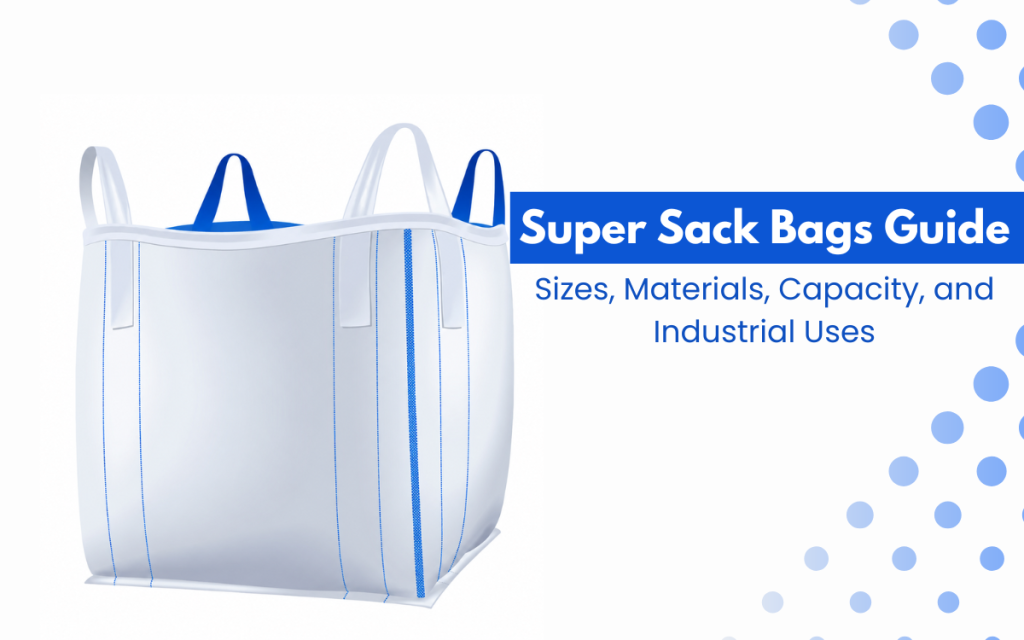
Super Sack Bags Guide: Sizes, Materials, Capacity, and Industrial Uses
Bulk material handling has become a critical part of modern industries, with manufacturers constantly looking for packaging solutions that improve efficiency, reduce waste, and lower transportation costs.
This is where Super Sack Bags, also known as Flexible Intermediate Bulk Containers (FIBCs), play a vital role. According to a report by Grand View Research, the global FIBC market was valued at USD 5.64 billion in 2024 and is projected to reach USD 9.69 billion by 2033, driven by increasing demand from agriculture, food processing, chemicals, pharmaceuticals, construction, and mining sectors.
Designed to store and transport large quantities of dry, flowable materials, Super Sack Bags offer high load-bearing strength, space-saving storage, and cost-effective logistics compared to traditional packaging methods. However, selecting the right bag requires understanding key factors such as size, material type, weight capacity, safety standards, and intended industrial application.
This guide covers everything you need to know about Super Sack Bags, including available sizes, fabric materials, carrying capacities, and their most common industrial uses. Whether you are managing bulk grain, chemicals, minerals, or food ingredients, this comprehensive guide will help you choose the most suitable FIBC solution for improved operational efficiency and product protection.
What Are Super Sack Bags?
Super Sack Bags, commonly known as Flexible Intermediate Bulk Containers (FIBCs), are large industrial-grade bags designed for storing, handling, and transporting bulk dry materials. Manufactured from woven polypropylene fabric, these bags offer exceptional strength, durability, and load-bearing capacity while remaining lightweight and cost-effective.
Super Sack Bags are widely used across industries such as agriculture, food processing, chemicals, pharmaceuticals, construction, and mining for moving products like grains, powders, fertilizers, minerals, and aggregates. Available in various sizes and configurations, they can typically carry between 500 kg and 2,000 kg of material, making them an efficient solution for bulk packaging and logistics operations.
Why Industries Switched to Super Sacks?
As industries expanded production and supply chain operations, traditional packaging methods often became costly, labor-intensive, and inefficient. Super Sack Bags emerged as a practical solution for handling large volumes of materials while improving overall operational efficiency.
a) Reduced Labor Costs
Super Sacks can hold hundreds or even thousands of kilograms of material in a single bag. This reduces the need for handling multiple smaller bags, lowering manual labor requirements and minimizing loading and unloading time.
b) Improved Transportation Efficiency
The high-capacity design of FIBC bags allows more material to be transported per shipment. Their lightweight construction also helps reduce packaging weight, resulting in lower freight costs and improved logistics performance.
c) Better Warehouse Utilization
Designed for stacking and space optimization, Super Sack Bags help maximize storage capacity. Their flexible structure occupies less space when empty and allows efficient inventory management.
For these reasons, Super Sacks have become a preferred bulk packaging solution across manufacturing, agriculture, food processing, chemical, and construction industries.
Types of Super Sack Bags
Super Sack Bags are available in different categories based on their ability to handle static electricity and the environments in which they are used. Choosing the right FIBC type is essential for safety, compliance, and efficient material handling.
1. Type A FIBC Bags
Type A bags are made from standard woven polypropylene fabric without any anti-static properties. They are suitable for transporting non-flammable products in environments where combustible dust or gases are not present.
2. Type B FIBC Bags
Type B bags are similar to Type A but are designed with low breakdown voltage properties. They help prevent highly energetic brush discharges, making them suitable for handling dry, combustible powders. However, they should not be used around flammable gases or solvents.
3. Type C Conductive Bags
Also known as groundable FIBCs, Type C bags contain conductive threads woven into the fabric. These bags must be properly grounded during filling and discharge operations to safely dissipate static electricity and reduce the risk of sparks.
4. Type D Anti-Static Bags
Type D bags are manufactured using static-dissipative fabrics that safely release electrostatic charges into the atmosphere. Unlike Type C bags, they do not require grounding, making them a convenient and safe choice for handling combustible materials in sensitive industrial environments.
Super Sack Bag Sizes
Super Sack Bags are available in various dimensions to accommodate different material volumes, storage requirements, and transportation needs. Selecting the right size helps maximize efficiency while reducing handling and logistics costs.
Small Super Sack Sizes (35 × 35 × 35 Inches)
These compact FIBC bags are ideal for lower-volume applications and facilities with limited storage space. They are commonly used for specialty powders, seeds, food ingredients, and smaller bulk material shipments.
Medium Super Sack Sizes (35 × 35 × 50 Inches)
Medium-sized Super Sacks offer a balance between capacity and maneuverability. They are widely used across agriculture, food processing, chemical, and manufacturing industries for storing and transporting bulk products efficiently.
Large Super Sack Sizes (42 × 42 × 60 Inches)
Large FIBC bags provide higher storage capacity and are suitable for handling heavy materials such as minerals, aggregates, fertilizers, grains, and industrial raw materials. Their larger volume helps reduce packaging and transportation costs.
Custom Super Sack Sizes (Height × Width Variations)
For unique operational requirements, manufacturers can customize bag dimensions, capacity, and design features to meet specific material handling, storage, and shipping needs.
Industrial Uses of Super Sack Bags
Super Sack Bags have become an essential bulk packaging solution across multiple industries due to their high capacity, durability, and cost-effective material handling capabilities.
Agriculture Industry
Used for storing and transporting grains, seeds, fertilizers, animal feed, and other agricultural products.
Construction Industry
Ideal for handling sand, cement, gravel, aggregates, and construction waste on project sites.
Food Industry
Widely used for bulk packaging of flour, sugar, rice, starch, spices, and other food-grade ingredients.
Chemical Industry
Suitable for transporting powders, resins, pigments, fertilizers, and various industrial chemicals safely.
Pharmaceutical Industry
Used for storing and moving pharmaceutical raw materials, powders, and active ingredients under controlled conditions.
Mining Industry
Helps transport minerals, ores, coal, and other extracted materials efficiently from mining locations.
Recycling Industry
Commonly used for collecting, storing, and transporting recyclable materials such as plastic scraps, metal pieces, and paper waste.
Plastic Manufacturing Industry
Essential for handling plastic granules, polymers, resin pellets, and raw materials used in production processes.
Their versatility, strength, and logistical advantages make Super Sack Bags a preferred choice for modern industrial operations worldwide.
Advantages of Using Super Sack Bags
Super Sack Bags have become a preferred bulk packaging solution because they improve efficiency while reducing operational costs across various industries.
Reduced Packaging Costs
A single Super Sack can replace multiple smaller bags, lowering packaging material and handling expenses.
Easy Transportation
Their high-capacity design allows large quantities of materials to be moved in fewer shipments, improving logistics efficiency.
Space Optimization
Super Sack Bags utilize warehouse space effectively and can be stored compactly when empty.
Improved Worker Safety
Designed for forklift and lifting equipment handling, they reduce manual lifting and help minimize workplace injuries.
Lower Product Wastage
Durable woven polypropylene construction protects materials from contamination, spills, and product loss during storage and transport.
Stackability Benefits
Many FIBC designs can be stacked safely, helping businesses maximize storage capacity and maintain organized inventory management.
Reusability Features
Certain Super Sack Bags are designed for multiple uses, making them a cost-effective and environmentally responsible packaging option.
With their durability, flexibility, and operational benefits, Super Sack Bags continue to support safer, more efficient, and more economical bulk material handling across industries worldwide.
How to Choose the Right Super Sack Bag Manufacturer/Supplier?
Selecting the right Super Sack Bag supplier is crucial for product quality, safety, and long-term reliability. Look for manufacturers with proven industry experience, quality certifications, and compliance with international FIBC standards. Evaluate their customization capabilities, production capacity, material quality, and testing procedures.
A reliable supplier should also offer technical support, competitive pricing, and consistent delivery schedules. Reading customer reviews and reviewing past projects can help ensure you partner with a manufacturer that meets your specific bulk packaging requirements.
Conclusion:
Super Sack Bags have transformed bulk material handling by offering a durable, cost-effective, and highly efficient packaging solution for industries ranging from agriculture and food processing to chemicals, mining, and construction. Understanding the different FIBC types, sizes, materials, load capacities, and industrial applications is essential for selecting the right bag for your operational needs. The right choice can improve workplace safety, reduce transportation costs, optimize warehouse space, and minimize product wastage.
If you are looking for reliable, high-quality Super Sack Bags tailored to your business requirements, Satyendra Packaging Ltd. can help. With extensive industry expertise, advanced manufacturing capabilities, and a commitment to quality, the company provides customized FIBC solutions designed for safe and efficient bulk packaging.
Choosing a trusted manufacturer ensures consistent performance, regulatory compliance, and long-term value. By investing in the right Super Sack Bags today, businesses can streamline logistics, improve productivity, and build a more efficient supply chain for the future.
Recent Blogs
- Ventilated FIBC Bags: A Bulk Packaging Solution for Heat-Sensitive Products
- Top Reasons to Source FIBC Bags from Indian Manufacturers
- BOPP Packaging Film vs CPP vs PET Film: Which Packaging Material Wins?
- PP Woven Bags for Packaging: Types, Uses, Benefits & Manufacturing Process
- Top UV Masterbatch Manufacturer for Agriculture & Industrial Applications
- FIBC Bulk Bags Unloading Guide: Essential Equipment, Safety Checks, and Techniques
- The Ultimate Guide to Tunnel Bags for Cement and Construction Industry
- Non Woven Bags: A Smart Packaging Move That Boosts Sales & Sustainability
- FIBC Jumbo Bags Handling Guide: 8 Expert Tips to Prevent Accidents & Loss
- Woven Polypropylene vs. Paper Bags: Which is Best for Heavy-Duty Industrial Use
- What Is Masterbatch? Types, Advantages, and Role in Plastic Industry
- Ventilated Bulk Bags Explained: Design, Durability, and Real-World Applications
- Pinch Bottom Bags: Why Brands Are Switching to This Smart Packaging?
- FIBC vs. Rigid Containers: Which One Delivers Better ROI for Bulk Transport?
- The Rise of Flexible Packaging: What Manufacturers and Startups Must Know
- What Is PP Multifilament Yarn? Benefits, Uses, and Industry Applications
- Polypropylene (PP): Uses, Benefits, and Applications in Packaging Industry
- Leno Bags: A Stronger Packaging Backbone for India’s Farm Produce Market
- The Ultimate Guide to Choosing the Geotextile Fabric for Your Project
- Top 6 Best Packaging Materials for Bulk Goods: Strong & Sustainable
- What is Flexible Packaging? The Smart Choice for FMCG Export & Supply
- Complete Guide to FIBC Bags – Types, Uses, and Benefits You Should Know
- BOPP Laminated Woven Bags Benefits | Satyendra Packaging
- Innovative BOPP Film | Satyendra Packaging Ltd Manufacturing
- BOPP Pinch Bottom Bags | Reliable Custom Packaging
- BOPP Laminated PP Woven Sacks | Durable Custom Packaging
- Leno Bags for Fresh Produce – Breathable & Durable Packs
- PP Woven Fabric: Meaning, Properties & Applications Guide
- FIBC Jumbo Bags: Uses, Benefits & More | Satyendra Packaging
- Top 5 Benefits of Woven Geotextile Fabrics in Roads
- High-Quality BOPP Film Packaging | Satyendra Packaging India
- Are BOPP Films Safe for Food Packaging? | Satyendra Group
- Are FIBCs Recyclable? A Guide to Sustainable Bulk Bags
- BOPP/PP Block Bottom Bags: Types, Benefits & Industry Uses
- Why PP Multifilament Yarn is Essential for Multiple Industries
- Boost Your Business with BOPP Bags
- Knitted Geotextiles: Game-Changer in Civil Engineering Solutions
- How Flexible Packaging Solutions Help to Grow Business
- FIBC Bags: The Versatile Solution for Bulk Material Handling
- Types of Flexible Packaging and Their Advantages
- Reasons Why PP Leno Mesh Bags Are the Best Choice for Produce Packaging
- Why BOPP Laminated PP Woven Bags Are Right For Your Business?
- Woven Polypropylene Bags: The Complete Guide
- Exploring the Benefits of FIBC Bulk Bags: A Practical Guide