FIBC Jumbo Bags Handling Guide: 8 Expert Tips to Prevent Accidents & Loss
Handling FIBC jumbo bags is not just about lifting and moving—it’s about controlling risk, preserving material integrity, and protecting your workforce. In modern bulk packaging operations, even a minor handling mistake can lead to product loss, contamination, or serious workplace accidents. That’s why a structured FIBC jumbo bags handling guide becomes critical for industries dealing with powders, granules, and chemicals.
From choosing the right lifting loops to understanding safe working load (SWL) limits, every step demands precision. Are your operators trained to identify fabric stress points or improper stacking risks? Many businesses overlook these small yet costly errors.
This guide reveals expert tips to prevent accidents and loss, combining real-world industrial practices with safety-first strategies. Whether you operate in food processing, agriculture, or chemicals, mastering safe FIBC bag handling can significantly reduce downtime, improve efficiency, and safeguard your supply chain from avoidable disruptions.
Why Proper Handling of Jumbo Bags Is Critical?
Proper handling of jumbo bags is critical because it directly impacts product safety, operational efficiency, and workplace risk management. FIBC bags are designed to carry heavy loads, but improper lifting, stacking, or storage can lead to bag failure, material spillage, and costly losses. Even slight mishandling can weaken lifting loops or damage the fabric, increasing the chances of accidents.
In industries like chemicals, food processing, and agriculture, contamination risks also rise when bags are not handled correctly. Beyond safety, poor handling slows down operations and affects supply chain reliability. Adopting the right jumbo bag handling practices ensures durability, reduces downtime, and protects both workers and valuable bulk materials.
8 Expert Tips to Prevent Accidents & Loss While Handling FIBC Jumbo Bags
Handling FIBC (Flexible Intermediate Bulk Container) jumbo bags requires care, precision, and the right practices to avoid accidents, product loss, and workplace hazards. These large-capacity bags are widely used across industries, but improper handling can lead to serious damage or safety risks. Here are eight expert tips to ensure safe and efficient operations.
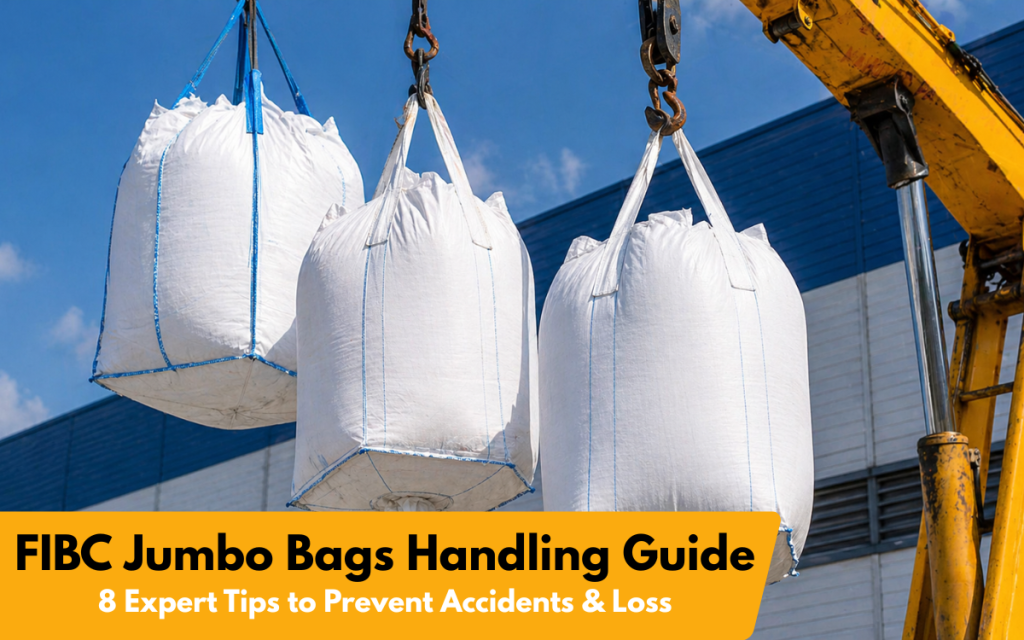
1. Always Lift Using All Loops
FIBC bags are designed with multiple lifting loops for a reason. Using all loops evenly helps maintain balance and prevents tearing or sudden drops during lifting.
2. Use the Right Lifting Equipment
Always choose appropriate equipment such as forklifts, cranes, or hoists with proper attachments. Mismatched or faulty equipment increases the risk of accidents.
3. Maintain Proper Load Limits
Every jumbo bag has a Safe Working Load (SWL). Exceeding this limit can weaken the bag structure and lead to breakage or spillage.
4. Ensure Even Weight Distribution
Uneven filling creates imbalance, making the bag unstable during lifting and storage. Proper distribution ensures safer handling and reduces strain on loops.
5. Avoid Dragging Bags
Dragging damages the fabric and compromises the bag’s strength. Always lift or use pallets to move bags safely across surfaces.
6. Store Bags in a Dry and Clean Environment
Moisture and dirt can weaken the material and contaminate the contents. Clean, dry storage conditions help maintain durability and product quality.
7. Stack Bags Safely
Stacking should be done on level ground with proper alignment. Avoid over-stacking, as it can lead to collapse and safety hazards.
8. Train Staff for Safe Handling
Well-trained staff can identify risks and follow best practices. Regular training ensures everyone understands proper procedures and safety standards.
Following these practical tips not only improves workplace safety but also enhances operational efficiency and reduces material loss.
How to Choose the Right FIBC Bag Supplier?
Choosing the right FIBC (Flexible Intermediate Bulk Container) bag supplier plays a crucial role in ensuring product safety, operational efficiency, and long-term cost savings. A reliable supplier doesn’t just provide bags—they contribute to your overall supply chain performance.
a) Certifications and Quality Assurance
Start by checking whether the supplier follows international quality standards. Certifications like ISO and compliance with safety guidelines ensure that the bags are tested for strength, durability, and safe handling. This reduces the risk of leakage, contamination, or accidents during transport.
b) Experience in Industry
An experienced supplier understands different industry requirements, whether it’s food-grade storage, chemicals, or construction materials. Their expertise helps in recommending the right type of FIBC bags suited to your application, ensuring better performance and reliability.
c) Custom Design Capabilities
Every business has unique needs. A good supplier should offer customization options such as size, fabric type, loop design, and printing. This flexibility helps improve storage efficiency, branding, and ease of handling.
d) Customer Support and Delivery Reliability
Timely delivery and responsive support are critical. Delays can disrupt your operations, so choose a supplier known for consistent supply and clear communication. Strong customer service ensures quick resolution of issues and a smoother business relationship.
Making a thoughtful choice here helps you avoid risks and build a dependable packaging system.
Conclusion:
Handling FIBC jumbo bags the right way is not just about safety—it directly impacts your product quality, operational efficiency, and overall business costs.
By following these expert tips, you can significantly reduce accidents, prevent material loss, and create a safer working environment for your team. Small practices like proper lifting, correct storage, and staff training make a big difference over time.
If you are looking for high-quality, durable, and industry-compliant FIBC solutions, Satyendra Packaging Ltd. (SPL) offers a wide range of reliable jumbo bags designed for safe handling and long-term performance. Partnering with the right manufacturer ensures you get both quality and peace of mind.
Adopting these best practices today will help you build a more efficient, safe, and loss-free material handling system for the future.
Recent Blogs
- Ventilated FIBC Bags: A Bulk Packaging Solution for Heat-Sensitive Products
- Top Reasons to Source FIBC Bags from Indian Manufacturers
- BOPP Packaging Film vs CPP vs PET Film: Which Packaging Material Wins?
- PP Woven Bags for Packaging: Types, Uses, Benefits & Manufacturing Process
- Top UV Masterbatch Manufacturer for Agriculture & Industrial Applications
- FIBC Bulk Bags Unloading Guide: Essential Equipment, Safety Checks, and Techniques
- Super Sack Bags Guide: Sizes, Materials, Capacity, and Industrial Uses
- The Ultimate Guide to Tunnel Bags for Cement and Construction Industry
- Non Woven Bags: A Smart Packaging Move That Boosts Sales & Sustainability
- Woven Polypropylene vs. Paper Bags: Which is Best for Heavy-Duty Industrial Use
- What Is Masterbatch? Types, Advantages, and Role in Plastic Industry
- Ventilated Bulk Bags Explained: Design, Durability, and Real-World Applications
- Pinch Bottom Bags: Why Brands Are Switching to This Smart Packaging?
- FIBC vs. Rigid Containers: Which One Delivers Better ROI for Bulk Transport?
- The Rise of Flexible Packaging: What Manufacturers and Startups Must Know
- What Is PP Multifilament Yarn? Benefits, Uses, and Industry Applications
- Polypropylene (PP): Uses, Benefits, and Applications in Packaging Industry
- Leno Bags: A Stronger Packaging Backbone for India’s Farm Produce Market
- The Ultimate Guide to Choosing the Geotextile Fabric for Your Project
- Top 6 Best Packaging Materials for Bulk Goods: Strong & Sustainable
- What is Flexible Packaging? The Smart Choice for FMCG Export & Supply
- Complete Guide to FIBC Bags – Types, Uses, and Benefits You Should Know
- BOPP Laminated Woven Bags Benefits | Satyendra Packaging
- Innovative BOPP Film | Satyendra Packaging Ltd Manufacturing
- BOPP Pinch Bottom Bags | Reliable Custom Packaging
- BOPP Laminated PP Woven Sacks | Durable Custom Packaging
- Leno Bags for Fresh Produce – Breathable & Durable Packs
- PP Woven Fabric: Meaning, Properties & Applications Guide
- FIBC Jumbo Bags: Uses, Benefits & More | Satyendra Packaging
- Top 5 Benefits of Woven Geotextile Fabrics in Roads
- High-Quality BOPP Film Packaging | Satyendra Packaging India
- Are BOPP Films Safe for Food Packaging? | Satyendra Group
- Are FIBCs Recyclable? A Guide to Sustainable Bulk Bags
- BOPP/PP Block Bottom Bags: Types, Benefits & Industry Uses
- Why PP Multifilament Yarn is Essential for Multiple Industries
- Boost Your Business with BOPP Bags
- Knitted Geotextiles: Game-Changer in Civil Engineering Solutions
- How Flexible Packaging Solutions Help to Grow Business
- FIBC Bags: The Versatile Solution for Bulk Material Handling
- Types of Flexible Packaging and Their Advantages
- Reasons Why PP Leno Mesh Bags Are the Best Choice for Produce Packaging
- Why BOPP Laminated PP Woven Bags Are Right For Your Business?
- Woven Polypropylene Bags: The Complete Guide
- Exploring the Benefits of FIBC Bulk Bags: A Practical Guide