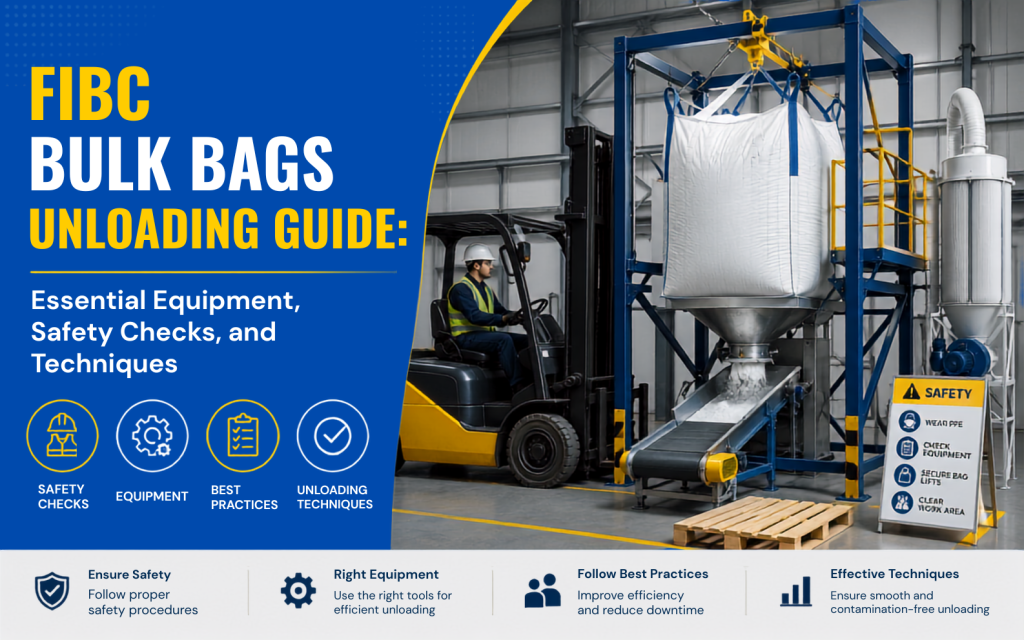
FIBC Bulk Bags Unloading Guide: Essential Equipment, Safety Checks, and Techniques
Efficient unloading is one of the most critical stages in the FIBC (Flexible Intermediate Bulk Container) supply chain. A poorly managed unloading process can lead to product contamination, material loss, workplace injuries, and costly production delays. As industries such as chemicals, food processing, agriculture, pharmaceuticals, and construction continue to rely on bulk packaging, the demand for safer and more efficient unloading systems is growing rapidly.
According to recent market research, the global FIBC market is expected to surpass USD 9 billion within the next decade, driven by increasing demand for cost-effective bulk material handling solutions across industrial sectors. ( source: FIBC Market Report by Grand View Research )
Whether handling powders, granules, minerals, or food ingredients, selecting the right unloading equipment and following strict safety procedures can significantly improve operational efficiency. This guide explores essential FIBC bulk bag unloading equipment, pre-operation safety checks, proven unloading techniques, and industry best practices that help businesses minimize risks, reduce downtime, and maintain a smooth material flow throughout the unloading process.
Why Proper FIBC Bag Unloading Matters?
a) Workplace Safety Benefits
Proper unloading procedures reduce the risk of bag collapse, dust exposure, falling materials, and operator injuries. Using the right equipment and safety checks creates a safer working environment.
b) Operational Efficiency
Efficient unloading minimizes material wastage, prevents production delays, and ensures a continuous flow of bulk materials. This helps businesses maintain productivity and meet operational targets.
c) Product Quality Protection
Incorrect unloading can contaminate products with dust, moisture, or foreign particles. Controlled unloading methods preserve product integrity, especially in food, pharmaceutical, and chemical industries.
d) Equipment Longevity
Overloading, improper handling, and sudden material discharge can damage unloading stations and conveying systems. Following recommended unloading practices reduces wear and tear, lowers maintenance costs, and extends equipment lifespan.
Essential Equipment for FIBC Bulk Bag Unloading
Efficient FIBC bulk bag unloading depends on using the right equipment for safe handling and consistent material flow.
i) Bulk Bag Unloading Stations
These stations provide a secure framework for holding bulk bags during discharge. They improve operator safety and ensure controlled material release.
ii) Forklifts and Hoists
Forklifts and electric hoists are commonly used to lift and position FIBC bags onto unloading stations. Choosing equipment with adequate load capacity is essential for safe operations.
iii) Bag Lifting Frames and Cross Beams
Lifting frames and cross beams evenly distribute the bag's weight, reducing stress on lifting loops and minimizing the risk of damage during handling.
iv) Bulk Bag Conditioners
Conditioners help break up hardened or compacted materials inside the bag. They are particularly useful for powders and materials that tend to solidify during storage or transportation.
v) Vibratory Flow Aids
These devices use controlled vibration to improve material movement and prevent bridging or rat-holing within the bag, ensuring a smooth discharge process.
vi) Bag Massagers
Bag massagers apply gentle pressure to the sides of the FIBC, loosening compacted contents and improving flow without damaging the bag structure.
vii) Dust Collection Systems
Dust collectors capture airborne particles generated during unloading. They help maintain workplace cleanliness, improve air quality, and support compliance with safety regulations.
viii) Feeding and Conveying Equipment
Screw conveyors, pneumatic conveyors, and feeders transport discharged materials to the next stage of production. Proper integration of conveying systems reduces manual handling and increases process efficiency.
Together, these equipment solutions create a safer, cleaner, and more productive bulk material handling operation.
Step-by-Step FIBC Bulk Bag Unloading Process
Step 1: Prepare the Unloading Area
Before unloading begins, inspect the work area for hazards, ensure sufficient space for equipment movement, and verify that all unloading systems are clean and operational. Operators should wear the required personal protective equipment (PPE).
Step 2: Position the Bulk Bag Correctly
Move the FIBC bag to the unloading station using a forklift or hoist. Align the bag properly to ensure stable lifting and accurate placement above the discharge point.
Step 3: Lift and Secure the Bag
Attach the lifting loops to the designated lifting frame or cross beam. Raise the bag carefully and secure it according to equipment guidelines to prevent shifting during discharge.
Step 4: Connect the Discharge Spout
Locate the bag’s discharge spout and securely connect it to the receiving hopper, feeder, or conveyor system. Proper sealing helps minimize dust generation and product loss.
Step 5: Begin Controlled Discharge
Gradually open the discharge spout to allow material to flow at a controlled rate. Avoid sudden opening, which can cause surges, spills, or equipment strain.
Step 6: Monitor Material Flow
Observe the discharge process continuously. If material bridging, clogging, or uneven flow occurs, use approved flow aids such as vibrators or bag massagers to restore movement safely.
Step 7: Empty Residual Material
Once most of the material has discharged, inspect the bag for remaining contents. Gently use conditioning equipment or flow aids to release residual material and maximize product recovery.
Step 8: Remove and Dispose of the Empty Bag
After complete discharge, disconnect the spout and lower the empty bag carefully. Follow facility procedures for recycling, reuse, or disposal. A final inspection of the unloading area ensures cleanliness, safety, and readiness for the next bulk bag operation.
Conclusion:
Efficient FIBC bulk bag unloading is more than simply emptying a container—it is a critical process that directly impacts workplace safety, product quality, operational efficiency, and equipment performance.
By selecting the right unloading equipment, conducting thorough safety inspections, and following proven unloading techniques, businesses can minimize material loss, reduce downtime, and maintain a safer working environment.
Whether handling food ingredients, chemicals, minerals, or agricultural products, a well-designed unloading system helps ensure smooth and consistent material flow throughout the production process. Companies that invest in proper unloading practices often achieve better productivity and lower maintenance costs over time.
If you're looking for high-quality FIBC bulk bags designed for durability, safety, and reliable bulk material handling, consider partnering with Satyendra Packaging Ltd. (SPL). With industry expertise and advanced manufacturing capabilities, SPL provides packaging solutions that support efficient storage, transportation, and unloading operations across diverse industries.
Recent Blogs
- BOPP Packaging Film vs CPP vs PET Film: Which Packaging Material Wins?
- PP Woven Bags for Packaging: Types, Uses, Benefits & Manufacturing Process
- Top UV Masterbatch Manufacturer for Agriculture & Industrial Applications
- Super Sack Bags Guide: Sizes, Materials, Capacity, and Industrial Uses
- The Ultimate Guide to Tunnel Bags for Cement and Construction Industry
- Non Woven Bags: A Smart Packaging Move That Boosts Sales & Sustainability
- FIBC Jumbo Bags Handling Guide: 8 Expert Tips to Prevent Accidents & Loss
- Woven Polypropylene vs. Paper Bags: Which is Best for Heavy-Duty Industrial Use
- What Is Masterbatch? Types, Advantages, and Role in Plastic Industry
- Ventilated Bulk Bags Explained: Design, Durability, and Real-World Applications
- Pinch Bottom Bags: Why Brands Are Switching to This Smart Packaging?
- FIBC vs. Rigid Containers: Which One Delivers Better ROI for Bulk Transport?
- The Rise of Flexible Packaging: What Manufacturers and Startups Must Know
- What Is PP Multifilament Yarn? Benefits, Uses, and Industry Applications
- Polypropylene (PP): Uses, Benefits, and Applications in Packaging Industry
- Leno Bags: A Stronger Packaging Backbone for India’s Farm Produce Market
- The Ultimate Guide to Choosing the Geotextile Fabric for Your Project
- Top 6 Best Packaging Materials for Bulk Goods: Strong & Sustainable
- What is Flexible Packaging? The Smart Choice for FMCG Export & Supply
- Complete Guide to FIBC Bags – Types, Uses, and Benefits You Should Know
- BOPP Laminated Woven Bags Benefits | Satyendra Packaging
- Innovative BOPP Film | Satyendra Packaging Ltd Manufacturing
- BOPP Pinch Bottom Bags | Reliable Custom Packaging
- BOPP Laminated PP Woven Sacks | Durable Custom Packaging
- Leno Bags for Fresh Produce – Breathable & Durable Packs
- PP Woven Fabric: Meaning, Properties & Applications Guide
- FIBC Jumbo Bags: Uses, Benefits & More | Satyendra Packaging
- Top 5 Benefits of Woven Geotextile Fabrics in Roads
- High-Quality BOPP Film Packaging | Satyendra Packaging India
- Are BOPP Films Safe for Food Packaging? | Satyendra Group
- Are FIBCs Recyclable? A Guide to Sustainable Bulk Bags
- BOPP/PP Block Bottom Bags: Types, Benefits & Industry Uses
- Why PP Multifilament Yarn is Essential for Multiple Industries
- Boost Your Business with BOPP Bags
- Knitted Geotextiles: Game-Changer in Civil Engineering Solutions
- How Flexible Packaging Solutions Help to Grow Business
- FIBC Bags: The Versatile Solution for Bulk Material Handling
- Types of Flexible Packaging and Their Advantages
- Reasons Why PP Leno Mesh Bags Are the Best Choice for Produce Packaging
- Why BOPP Laminated PP Woven Bags Are Right For Your Business?
- Woven Polypropylene Bags: The Complete Guide
- Exploring the Benefits of FIBC Bulk Bags: A Practical Guide