BOPP vs PP Woven Bags: A Complete Guide for Manufacturers and Buyers
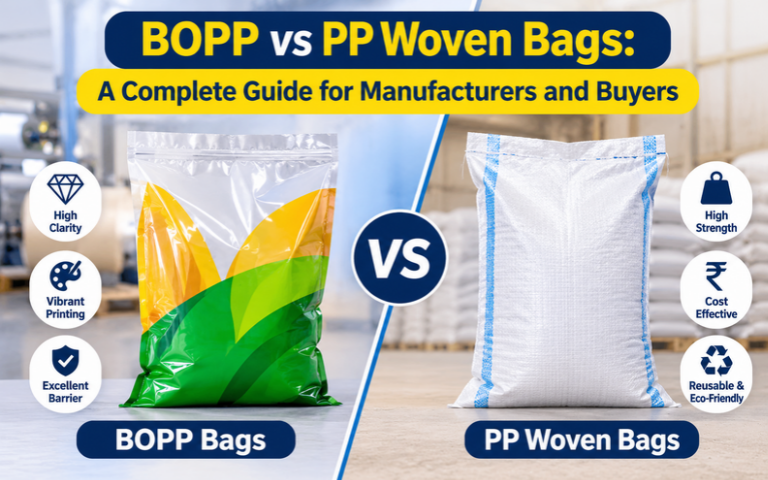
A packaging bag does more than carry a product. It protects the contents, withstands transportation, and, in many industries, creates the first impression of a brand. This is where the difference between BOPP bags and PP woven bags becomes important for manufacturers, packaging suppliers, and bulk buyers. Both packaging solutions are made using woven polypropylene fabric, but their performance, appearance, and applications can vary significantly.
BOPP bags combine the strength of PP woven fabric with a high-quality printed film, delivering vibrant graphics and better shelf appeal for products such as rice, flour, seeds, and animal feed. Standard PP woven bags, meanwhile, are widely used for their durability, load-bearing capacity, and cost-effective bulk packaging. So, which option offers better value for your business? This guide explores BOPP vs PP woven bags, comparing their construction, benefits, limitations, applications, and costs to help you identify the right packaging solution for your product and market requirements.
What Are PP Woven Bags?
PP woven bags are durable packaging bags manufactured by weaving polypropylene (PP) tapes into a strong, flexible fabric. This woven structure provides excellent tensile strength, making these bags suitable for carrying and transporting heavy or bulk materials. PP woven bags are widely used in agriculture, construction, food processing, and industrial packaging for products such as rice, wheat, sugar, fertilisers, cement, and animal feed. They are available in different sizes, weights, and designs, with options for printing, liners, and customised closures to meet specific packaging requirements.
What Are BOPP Woven Bags?
BOPP woven bags are polypropylene packaging bags made by laminating a biaxially oriented polypropylene (BOPP) film onto woven PP fabric. This combination delivers the strength of woven polypropylene with the visual appeal of high-quality printing. BOPP bags support vibrant colours, detailed graphics, product information, and attractive branding, making them popular for consumer-facing products. Common applications include rice, flour, pet food, seeds, fertilisers, and animal feed packaging. Depending on their construction, these bags can also offer improved surface protection and moisture resistance compared with unlaminated woven bags.
BOPP vs PP Woven Bags: Key Differences at a Glance
BOPP bags and standard PP woven bags share a polypropylene base, but their construction, appearance, and packaging performance differ. Understanding these differences helps manufacturers and bulk buyers select suitable packaging for their products, branding goals, and budget.
Here are the key differences between BOPP woven bags and PP woven bags:
- Material: Both use woven polypropylene fabric, but BOPP bags feature an additional biaxially oriented polypropylene film.
- Printing Quality: BOPP bags support high-resolution graphics, vibrant colours, and detailed brand designs, while standard PP woven bags generally offer simpler printing.
- Durability: Both provide good tensile strength and resistance to rough handling, depending on fabric quality and bag construction.
- Moisture Protection: BOPP lamination can improve surface moisture resistance, but it does not automatically make a bag waterproof.
- Cost: Standard PP woven bags are often more economical, whereas BOPP bags may cost more because of lamination and premium printing.
The right option depends on your product, storage conditions, branding requirements, and overall packaging budget.
BOPP vs PP Woven Bags: Material and Construction Difference
The primary difference between BOPP bags and standard PP woven bags lies in their material layers and surface finish. While both use woven polypropylene fabric for strength, BOPP bags include an additional printed film that enhances appearance and surface protection.
PP Woven Bag Structure
PP woven bags are manufactured by interlacing polypropylene tapes to create a durable fabric. This structure provides good tensile strength, flexibility, and load-bearing capacity for packaging rice, grains, cement, fertilisers, and industrial materials. Depending on requirements, bags may include liners or coatings.
BOPP Woven Bag Structure
BOPP woven bags combine woven PP fabric with a biaxially oriented polypropylene film laminated onto the surface. This film supports high-quality printing, detailed graphics, and attractive product presentation.
Why the BOPP Layer Matters
The BOPP layer improves print clarity, colour vibrancy, and surface moisture resistance. It helps brands create distinctive packaging while retaining the strength of woven polypropylene fabric.
BOPP vs PP Woven Bags: Strength and Durability
Both BOPP bags and standard PP woven bags offer excellent strength for bulk packaging, but their durability depends on fabric quality, GSM, tape strength, stitching, and bag construction. PP woven bags are widely used for heavy products such as cement, grains, fertilisers, and industrial materials because of their load-bearing capacity and resistance to handling stress.
BOPP woven bags provide similar structural strength while adding a laminated film for improved surface protection and print durability. However, the film does not automatically increase the bag's load capacity. For manufacturers and buyers, selecting the right bag requires evaluating product weight, transportation conditions, stacking requirements, and potential exposure to moisture or abrasion.
Important Specifications Buyers Should Confirm Before Ordering
Ordering PP woven bags or BOPP laminated bags without checking technical specifications can lead to packaging failures, product wastage, and unnecessary costs. Manufacturers and buyers should confirm the following parameters before finalising an order.
a) Bag Dimensions
Specify the bag's length, width, gusset, and required filling capacity. Dimensions should accommodate the product volume, filling equipment, and storage requirements.
b) Fabric Specifications
Confirm polypropylene tape quality, fabric GSM, tape denier, weave density, and tensile strength. These parameters influence load-bearing capacity and resistance to handling stress.
c) Lamination Specifications
For BOPP woven bags, verify film thickness, lamination quality, adhesion, and surface finish. Proper lamination helps maintain print quality and surface protection.
d) Printing Specifications
Confirm the number of colours, artwork dimensions, printing method, colour consistency, and branding requirements before approving the final design.
e) Closure Specifications
Discuss stitched or heat-cut openings, bottom stitching, liners, and sealing options according to the product and filling process.
f) Performance Specifications
Check the safe filling weight, drop-test performance, stacking strength, and moisture protection requirements. Request samples and relevant quality-test reports before approving bulk production.
Conclusion:
The difference between BOPP bags and PP woven bags goes beyond appearance. Both offer reliable packaging strength, but the right choice depends on your product type, load requirements, branding objectives, moisture protection, and budget. Standard PP woven bags are ideal for economical bulk packaging, while BOPP woven bags combine durability with premium printing and improved shelf appeal.
For manufacturers and buyers, evaluating fabric specifications, lamination quality, stitching, and performance standards before placing bulk orders can help prevent packaging issues and improve operational efficiency.
Looking for dependable packaging solutions for your business? Satyendra Packaging Ltd. can help you explore polypropylene woven packaging options suited to your industrial and commercial requirements. Connect with the team to discuss your product specifications, customisation needs, and bulk packaging requirements.
Ultimately, investing in the right packaging helps protect products, strengthen brand presentation, and support a more efficient supply chain.
Recent Blogs
- PP Woven Bags for Cement, Fertilizer & Agriculture: A Complete Industry Guide
- BOPP vs PP Woven Bags: A Complete Guide for Manufacturers and Buyers
- Top Packaging Manufacturers That Export to USA Importers and Brands
- Ventilated FIBC Bags: A Bulk Packaging Solution for Heat-Sensitive Products
- Top Reasons to Source FIBC Bags from Indian Manufacturers
- BOPP Packaging Film vs CPP vs PET Film: Which Packaging Material Wins?
- PP Woven Bags for Packaging: Types, Uses, Benefits & Manufacturing Process
- Top UV Masterbatch Manufacturer for Agriculture & Industrial Applications
- The Ultimate Guide to Tunnel Bags for Cement and Construction Industry
- Pinch Bottom Bags: Why Brands Are Switching to This Smart Packaging?
- FIBC vs. Rigid Containers: Which One Delivers Better ROI for Bulk Transport?
- Polypropylene (PP): Uses, Benefits, and Applications in Packaging Industry
- BOPP Laminated Woven Bags Benefits | Satyendra Packaging
- PP Woven Fabric: Meaning, Properties & Applications Guide
- Are FIBCs Recyclable? A Guide to Sustainable Bulk Bags
- Knitted Geotextiles: Game-Changer in Civil Engineering Solutions
- How Flexible Packaging Solutions Help to Grow Business
- FIBC Bags: The Versatile Solution for Bulk Material Handling
- Why BOPP Laminated PP Woven Bags Are Right For Your Business?
- Flexible Packaging Film: Types, Materials, Uses & Benefits Explained
- FIBC Bulk Bags Unloading Guide: Essential Equipment, Safety Checks, and Techniques
- Super Sack Bags Guide: Sizes, Materials, Capacity, and Industrial Uses
- Non Woven Bags: A Smart Packaging Move That Boosts Sales & Sustainability
- FIBC Jumbo Bags Handling Guide: 8 Expert Tips to Prevent Accidents & Loss
- Woven Polypropylene vs. Paper Bags: Which is Best for Heavy-Duty Industrial Use
- What Is Masterbatch? Types, Advantages, and Role in Plastic Industry
- Ventilated Bulk Bags Explained: Design, Durability, and Real-World Applications
- The Rise of Flexible Packaging: What Manufacturers and Startups Must Know
- What Is PP Multifilament Yarn? Benefits, Uses, and Industry Applications
- Leno Bags: A Stronger Packaging Backbone for India’s Farm Produce Market
- The Ultimate Guide to Choosing the Geotextile Fabric for Your Project
- Top 6 Best Packaging Materials for Bulk Goods: Strong & Sustainable
- What is Flexible Packaging? The Smart Choice for FMCG Export & Supply
- Leno Bags for Fresh Produce – Breathable & Durable Packs
- Complete Guide to FIBC Bags – Types, Uses, and Benefits You Should Know
- Innovative BOPP Film | Satyendra Packaging Ltd Manufacturing
- BOPP Laminated PP Woven Sacks | Durable Custom Packaging
- BOPP Pinch Bottom Bags | Reliable Custom Packaging
- FIBC Jumbo Bags: Uses, Benefits & More | Satyendra Packaging
- Top 5 Benefits of Woven Geotextile Fabrics in Roads
- High-Quality BOPP Film Packaging | Satyendra Packaging India
- Are BOPP Films Safe for Food Packaging? | Satyendra Group
- BOPP/PP Block Bottom Bags: Types, Benefits & Industry Uses
- Why PP Multifilament Yarn is Essential for Multiple Industries
- Boost Your Business with BOPP Bags
- Types of Flexible Packaging and Their Advantages
- Reasons Why PP Leno Mesh Bags Are the Best Choice for Produce Packaging
- Exploring the Benefits of FIBC Bulk Bags: A Practical Guide
- Woven Polypropylene Bags: The Complete Guide