Ventilated Bulk Bags Explained: Design, Durability, and Real-World Applications
Bulk packaging plays a crucial role in industries where product quality, airflow, and safe transportation matter. This is where ventilated bulk bags come into the spotlight. Designed with strategically placed ventilation panels or breathable fabric, these FIBC ventilated bags help maintain proper air circulation during storage and transport. Industries dealing with agricultural produce, firewood, onions, potatoes, and other moisture-sensitive goods rely heavily on ventilated FIBC bags to prevent condensation, reduce spoilage, and maintain product freshness.
According to packaging industry insights, the global FIBC market is projected to cross USD 10 billion by 2030 (Source), with ventilated bulk bags gaining strong demand in agriculture and food logistics. Their ability to combine strength, breathability, and high load capacity makes them a smart solution for bulk handling.
If you’ve ever wondered why certain products travel thousands of kilometers without losing quality, the answer often lies in smart packaging. Ventilated bulk bags are a perfect example of how thoughtful design directly improves storage efficiency and product safety.
What Are Ventilated Bulk Bags?
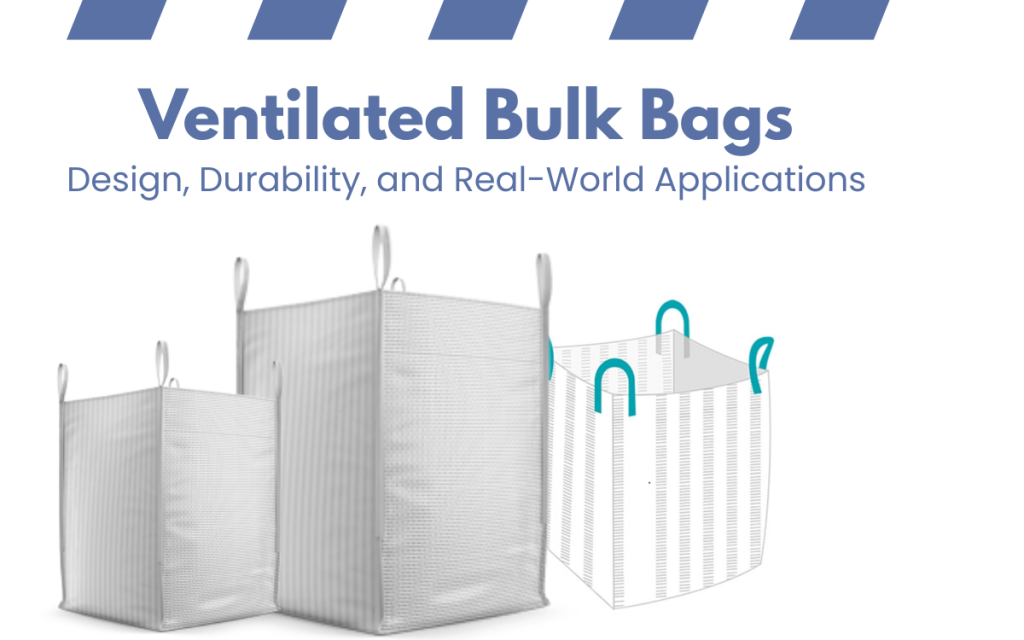
Ventilated bulk bags are a type of Flexible Intermediate Bulk Container (FIBC) specially designed to allow airflow during storage and transportation of bulk products. Unlike standard FIBC bags, these bags feature ventilated panels or breathable fabric strips that promote natural air circulation. This design helps reduce moisture buildup, prevents condensation, and keeps products fresh for longer periods.
Ventilated bulk bags are widely used for agricultural produce such as onions, potatoes, garlic, and firewood, where proper ventilation is essential to maintain quality. Their strong woven polypropylene structure also ensures high load capacity, durability, and safe bulk handling, making them a reliable packaging solution for industries dealing with moisture-sensitive goods.
Design Features of Ventilated Bulk Bags
a) Breathable Fabric Construction
Ventilated bulk bags are engineered with strategically placed ventilation panels or breathable woven polypropylene strips that allow air to circulate through the bag. This airflow helps reduce moisture buildup and prevents condensation, which is especially important when transporting products like onions, potatoes, garlic, or firewood.
By allowing natural ventilation, these bags help maintain product freshness and minimize spoilage during long-distance transport and storage.
b) Load-Bearing Structure
Despite their breathable design, ventilated bulk bags are built for strength. They feature a durable woven polypropylene body with reinforced lifting loops, enabling them to carry heavy loads safely. Most ventilated FIBC bags can handle 500 kg to 1500 kg capacity, making them suitable for bulk storage and industrial logistics while ensuring stability during stacking, lifting, and shipping.
c) Customization Options
Manufacturers often provide customization such as different ventilation patterns, loop configurations, printing, sizes, and liner options. This flexibility allows businesses to choose designs that match their product type, transportation method, and branding needs.
Key Benefits of Ventilated Bulk Bags
Ventilated bulk bags offer several practical advantages for industries that handle fresh produce and moisture-sensitive goods. Their breathable structure, strong load capacity, and flexible handling make them a reliable packaging solution for agriculture, food logistics, and bulk storage. Below are some of the key benefits that make ventilated FIBC bags widely preferred in modern supply chains.
i) Improved Airflow for Fresh Produce and Agricultural Goods
Ventilated bulk bags are designed with breathable fabric panels that allow continuous air circulation. This airflow helps maintain the quality of products such as onions, potatoes, garlic, and firewood during storage and transportation.
ii) Reduced Spoilage, Mold, and Condensation
Proper ventilation minimizes moisture buildup inside the bag. This reduces the chances of mold formation, condensation, and product spoilage, especially during long transit periods.
iii) Efficient Storage and Transport
These bags are lightweight yet durable, allowing easy handling with forklifts or cranes while maximizing warehouse and transport space.
iv) Cost Savings Compared to Rigid Containers
Ventilated bulk bags are more economical than plastic bins or wooden crates and also reduce storage and transport costs.
v) Sustainability Advantages
Many ventilated FIBC bags are reusable and recyclable, making them a more sustainable bulk packaging option while supporting efficient agricultural supply chains.
Real-World Applications Across Industries
Ventilated bulk bags are widely used across different industries where airflow, durability, and efficient bulk handling are essential. Their breathable construction helps maintain product quality while making storage and transportation more efficient. From agriculture to industrial sectors, these bags support safe and practical bulk packaging solutions.
1. Agriculture and Horticulture
One of the most common uses of ventilated bulk bags is in agriculture. Farmers and suppliers use them for crops such as onions, potatoes, garlic, carrots, and other root vegetables. The breathable fabric allows air to circulate, helping keep produce fresh and reducing moisture buildup during storage and transit.
2. Food Processing and Distribution
Food processing companies rely on ventilated FIBC bags to move raw agricultural materials from farms to processing units. Proper airflow helps maintain quality and prevents spoilage before the products reach sorting, cleaning, or packaging facilities.
3. Firewood and Biomass
Ventilated bags are ideal for storing and transporting firewood, wood chips, and biomass materials. The airflow helps dry the wood naturally and prevents moisture accumulation that could affect burning efficiency.
4. Industrial and Chemical Uses
Some industrial products and raw materials also require breathable storage conditions. Ventilated bulk bags provide strong load capacity while allowing controlled airflow, making them suitable for select industrial and chemical handling applications.
Conclusion:
Ventilated bulk bags have become an essential packaging solution for industries that require both strength and airflow. Their thoughtful design, durable woven structure, and breathable fabric panels help maintain product quality while ensuring safe and efficient bulk handling. From agriculture and food processing to firewood and select industrial uses, these bags offer a reliable way to reduce moisture buildup, prevent spoilage, and simplify transportation. As supply chains continue to demand smarter packaging solutions, ventilated FIBC bags stand out for their efficiency, flexibility, and cost-effectiveness.
If your business deals with products that require proper ventilation during storage or transport, choosing the right bulk packaging partner makes all the difference. Satyendra Packaging Ltd. (SPL) offers high-quality ventilated bulk bags designed to meet modern industry standards and customized packaging needs.
With the right design and manufacturing expertise, ventilated bulk bags can significantly improve product safety, storage efficiency, and overall logistics performance across multiple industries.
Recent Blogs
- What Is Masterbatch? Types, Advantages, and Role in Plastic Industry
- Pinch Bottom Bags: Why Brands Are Switching to This Smart Packaging?
- FIBC vs. Rigid Containers: Which One Delivers Better ROI for Bulk Transport?
- The Rise of Flexible Packaging: What Manufacturers and Startups Must Know
- What Is PP Multifilament Yarn? Benefits, Uses, and Industry Applications
- Polypropylene (PP): Uses, Benefits, and Applications in Packaging Industry
- Leno Bags: A Stronger Packaging Backbone for India’s Farm Produce Market
- The Ultimate Guide to Choosing the Geotextile Fabric for Your Project
- Top 6 Best Packaging Materials for Bulk Goods: Strong & Sustainable
- What is Flexible Packaging? The Smart Choice for FMCG Export & Supply
- Complete Guide to FIBC Bags – Types, Uses, and Benefits You Should Know
- BOPP Laminated Woven Bags Benefits | Satyendra Packaging
- Innovative BOPP Film | Satyendra Packaging Ltd Manufacturing
- BOPP Pinch Bottom Bags | Reliable Custom Packaging
- BOPP Laminated PP Woven Sacks | Durable Custom Packaging
- Leno Bags for Fresh Produce – Breathable & Durable Packs
- PP Woven Fabric: Meaning, Properties & Applications Guide
- FIBC Jumbo Bags: Uses, Benefits & More | Satyendra Packaging
- Top 5 Benefits of Woven Geotextile Fabrics in Roads
- High-Quality BOPP Film Packaging | Satyendra Packaging India
- Are BOPP Films Safe for Food Packaging? | Satyendra Group
- Are FIBCs Recyclable? A Guide to Sustainable Bulk Bags
- BOPP/PP Block Bottom Bags: Types, Benefits & Industry Uses
- Why PP Multifilament Yarn is Essential for Multiple Industries
- Boost Your Business with BOPP Bags
- Knitted Geotextiles: Game-Changer in Civil Engineering Solutions
- How Flexible Packaging Solutions Help to Grow Business
- FIBC Bags: The Versatile Solution for Bulk Material Handling
- Types of Flexible Packaging and Their Advantages
- Reasons Why PP Leno Mesh Bags Are the Best Choice for Produce Packaging
- Why BOPP Laminated PP Woven Bags Are Right For Your Business?
- Woven Polypropylene Bags: The Complete Guide
- Exploring the Benefits of FIBC Bulk Bags: A Practical Guide