Pinch Bottom Bags: Why Brands Are Switching to This Smart Packaging?
In an era where packaging does more than just contain a product, pinch bottom bags have emerged as a strategic upgrade for brands across food, agriculture, industrial, and retail sectors. These bags aren’t just aesthetically pleasing — their design delivers real functional advantages: outstanding stability on shelves, superior sealing properties, and easier automated filling compared to traditional flat bags.
Market analysts note that the flexible packaging segment, which includes bags like pinch bottom formats, accounts for over 33% of the global flexible packaging market — a sector expected to expand from roughly USD 284.6 billion in 2026 (Source) with a strong CAGR through the next decade thanks to rising demand for convenience and sustainable formats.
From a brand perspective, the benefits are clear. Pinch bottom bags help reduce product damage and waste during transport, enhance on-shelf visibility, and support high-resolution branding — critical in crowded retail spaces.
Plus, with increasing consumer and regulatory pressure for recyclable and compostable packaging, these bags give brands a smart, future-ready solution that aligns growth with sustainability goals.
What Are Pinch Bottom Bags?
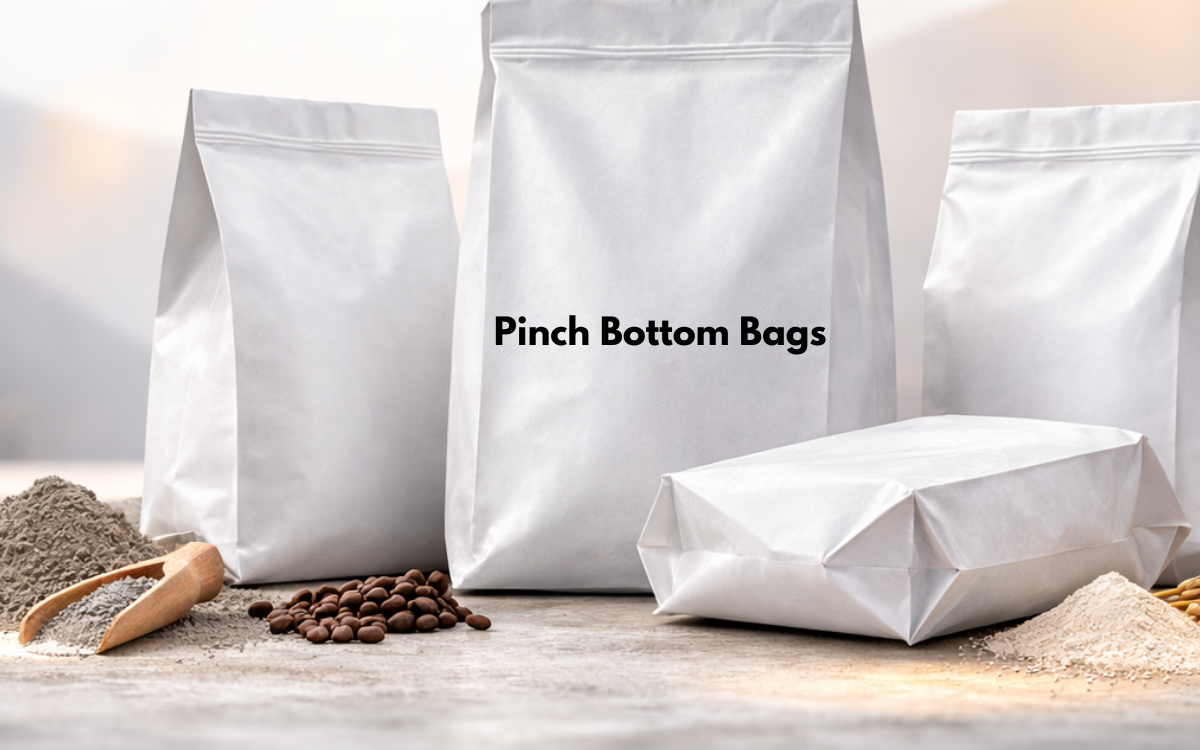
Pinch bottom bags are a type of flexible packaging designed with a folded and sealed bottom closure that creates a flat, stable base. Unlike traditional flat or stitched bags, the bottom of a pinch bottom bag is heat-sealed or glued, allowing it to stand upright on retail shelves. This structure improves product presentation, storage efficiency, and stacking strength.
Commonly used for packaging flour, animal feed, rice, chemicals, pet food, and powdered products, these bags are known for their durability and clean, premium appearance. They are typically made from multi-wall paper, polyethylene, or laminated materials, offering strong barrier protection against moisture and contamination while supporting high-speed automated filling processes.
1. Better Shelf Stability
Pinch bottom bags are designed with a flat, sealed base that allows them to stand upright securely. This improves shelf presence and reduces the chances of tipping or product spillage in retail environments. For brands, better stability means cleaner displays and stronger visual impact at the point of sale.
2. Space-Efficient Packaging
Thanks to their structured shape, these bags stack neatly during storage and transportation. They optimize pallet space, lower shipping costs, and improve warehouse efficiency—an important advantage for brands managing large distribution networks.
3. Premium Brand Appeal
The smooth surface and structured form offer ample printable area for high-quality graphics. This gives brands the opportunity to create eye-catching, premium packaging that strengthens brand identity and consumer trust.
4. Easy Filling & Sealing
Pinch bottom bags support automated filling systems and secure sealing, ensuring faster production, reduced product loss, and consistent packaging quality.
Industries that are Actively Using Pinch Bottom Bags
Pinch bottom bags are gaining strong adoption across multiple industries where durability, hygiene, and shelf presentation matter.
a) Food & FMCG (flour, rice, pulses, sugar, snacks)
In the food and FMCG sector, pinch bottom bags are widely used for staples like flour, rice, pulses, sugar, and packaged snacks. Their sturdy bottom seal prevents leakage, while the flat base ensures attractive shelf display in supermarkets and kirana stores. The structure also supports bulk packaging without compromising visual appeal.
b) Pet Food and Animal Feed
Pet food brands and livestock feed manufacturers prefer pinch bottom bags for their strength and load-bearing capacity. These bags handle heavier weights efficiently and protect dry kibble or feed from moisture during storage and transport.
c) Coffee, Tea, and Dry Beverage Mixes
For premium products like coffee, tea, and powdered beverage mixes, pinch bottom bags provide a clean, high-quality look. They also support barrier layers that preserve freshness and aroma.
d) Agricultural Products and Seeds
Seed companies and agro-product suppliers use these bags for secure packaging and easy stacking in warehouses.
e) Chemical Powders and Industrial Goods
Industrial manufacturers rely on pinch bottom bags for safe handling of powdered chemicals and construction materials.
Things to Consider Before Choosing Pinch Bottom Bags
Choosing the right pinch bottom bag requires more than just selecting an attractive design. Several technical and strategic factors should guide your decision.
i) Product Weight and Density
Start by evaluating the weight and density of your product. Heavier or high-density items like flour, animal feed, or chemical powders require stronger multi-wall paper or laminated structures to prevent tearing or bottom seal failure. The bag’s load-bearing capacity must match your packaging volume.
ii) Storage Conditions (Humidity, Temperature)
Environmental conditions play a critical role. If your product is stored in humid warehouses or transported across varying climates, moisture-resistant or laminated pinch bottom bags are essential. Proper barrier protection ensures product freshness, prevents contamination, and maintains structural integrity.
iii) Printing and Branding Requirements
Pinch bottom bags offer excellent printable surfaces, but you should define your branding needs in advance. Consider high-resolution graphics, color consistency, regulatory labeling, and whether you need matte, gloss, or specialty finishes for a premium appearance.
iv) Supplier and Quality Consistency
Finally, partner with a reliable supplier who maintains strict quality control standards. Consistent sealing strength, material thickness, and dimensional accuracy are crucial for automated filling lines and long-term brand reputation.
Why Brands in India Are Rapidly Adopting Pinch Bottom Bags
The Indian packaging landscape is evolving quickly, and pinch bottom bags are becoming a preferred choice for forward-thinking brands.
I. Growth of Organized Retail and Private Labels
With the rapid expansion of supermarkets, hypermarkets, and private label brands across India, shelf-ready packaging has become essential. Pinch bottom bags stand upright neatly, ensuring better product visibility and organized displays—key factors in modern retail environments.
2. Demand for Cost-Effective Yet Premium Packaging
Indian brands are constantly balancing cost control with premium appeal. Pinch bottom bags offer a structured, high-quality look without significantly increasing packaging costs. This makes them ideal for brands aiming to upgrade their packaging without affecting profit margins.
3. Consumer Preference for Neat, Sturdy Packaging
Today’s consumers prefer packaging that looks clean, stable, and easy to store at home. The flat base and strong sealing of pinch bottom bags reduce spillage and improve handling, increasing trust and satisfaction.
4. Export-Friendly Packaging Requirements
For Indian manufacturers targeting global markets, durable and stackable packaging is critical. Pinch bottom bags meet export standards by offering strength, moisture protection, and efficient palletization for international shipping.
Conclusion:
Pinch bottom bags are no longer just an alternative packaging option—they are becoming a strategic choice for brands that value durability, efficiency, and premium shelf presence. From better stability and space optimization to stronger sealing and enhanced branding opportunities, this packaging format offers clear operational and marketing advantages. As retail competition grows and logistics costs rise, brands need solutions that protect products while strengthening visual appeal.
In India and global markets alike, the shift toward structured, export-friendly, and cost-effective packaging is accelerating. This is where choosing the right manufacturing partner makes all the difference. Satyendra Packaging Ltd. (SPL) delivers high-quality pinch bottom bags designed for performance, consistency, and brand impact.
If you’re planning to upgrade your packaging strategy, now is the time to explore smarter solutions. Partner with SPL and give your products the stability, strength, and standout presence they deserve.
Recent Blogs
- What Is Masterbatch? Types, Advantages, and Role in Plastic Industry
- Ventilated Bulk Bags Explained: Design, Durability, and Real-World Applications
- FIBC vs. Rigid Containers: Which One Delivers Better ROI for Bulk Transport?
- The Rise of Flexible Packaging: What Manufacturers and Startups Must Know
- What Is PP Multifilament Yarn? Benefits, Uses, and Industry Applications
- Polypropylene (PP): Uses, Benefits, and Applications in Packaging Industry
- Leno Bags: A Stronger Packaging Backbone for India’s Farm Produce Market
- The Ultimate Guide to Choosing the Geotextile Fabric for Your Project
- Top 6 Best Packaging Materials for Bulk Goods: Strong & Sustainable
- What is Flexible Packaging? The Smart Choice for FMCG Export & Supply
- Complete Guide to FIBC Bags – Types, Uses, and Benefits You Should Know
- BOPP Laminated Woven Bags Benefits | Satyendra Packaging
- Innovative BOPP Film | Satyendra Packaging Ltd Manufacturing
- BOPP Pinch Bottom Bags | Reliable Custom Packaging
- BOPP Laminated PP Woven Sacks | Durable Custom Packaging
- Leno Bags for Fresh Produce – Breathable & Durable Packs
- PP Woven Fabric: Meaning, Properties & Applications Guide
- FIBC Jumbo Bags: Uses, Benefits & More | Satyendra Packaging
- Top 5 Benefits of Woven Geotextile Fabrics in Roads
- High-Quality BOPP Film Packaging | Satyendra Packaging India
- Are BOPP Films Safe for Food Packaging? | Satyendra Group
- Are FIBCs Recyclable? A Guide to Sustainable Bulk Bags
- BOPP/PP Block Bottom Bags: Types, Benefits & Industry Uses
- Why PP Multifilament Yarn is Essential for Multiple Industries
- Boost Your Business with BOPP Bags
- Knitted Geotextiles: Game-Changer in Civil Engineering Solutions
- How Flexible Packaging Solutions Help to Grow Business
- FIBC Bags: The Versatile Solution for Bulk Material Handling
- Types of Flexible Packaging and Their Advantages
- Reasons Why PP Leno Mesh Bags Are the Best Choice for Produce Packaging
- Why BOPP Laminated PP Woven Bags Are Right For Your Business?
- Woven Polypropylene Bags: The Complete Guide
- Exploring the Benefits of FIBC Bulk Bags: A Practical Guide