What Is PP Multifilament Yarn? Benefits, Uses, and Industry Applications
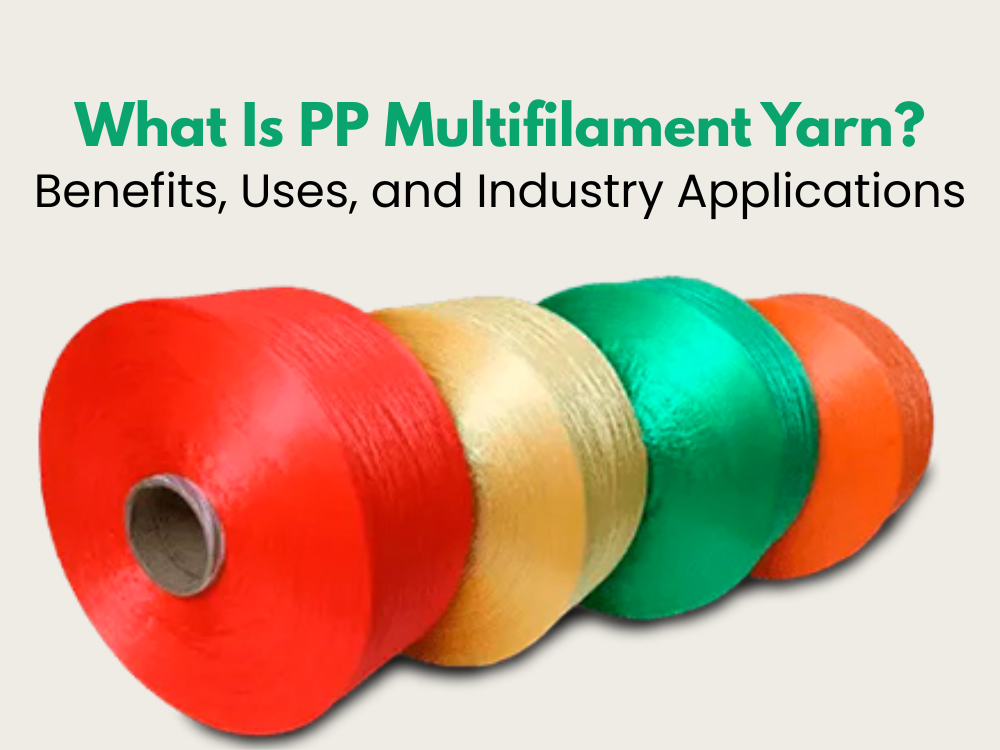
PP Multifilament yarn is a foundational material in today’s textile and industrial manufacturing landscape, valued for its strength, flexibility, and consistency. Created by twisting or grouping multiple continuous filaments into a single strand, it offers better durability and performance than single-filament yarns. This structure allows the yarn to withstand repeated stress while maintaining a smooth surface and uniform appearance, making it ideal for high-demand applications.
Widely produced using polymers such as polyester, nylon, and polypropylene, PP multifilament yarn supports industries ranging from apparel and home textiles to automotive interiors, medical textiles, geotextiles, and industrial packaging. One key industry fact is that multifilament yarns provide higher tensile strength-to-weight ratios, which helps manufacturers reduce material usage without compromising performance. Their excellent dye uptake, abrasion resistance, and moisture management further enhance product quality.
As global industries move toward efficiency and performance-driven materials, multifilament yarn continues to meet evolving technical requirements. Understanding its benefits, uses, and industry applications helps businesses make informed material choices in competitive and fast-changing markets.
What Is PP Multifilament Yarn?
Multifilament yarn is a type of yarn made by combining many fine, continuous filaments into a single strand. These filaments are usually produced from synthetic polymers such as polyester, nylon, or polypropylene using advanced spinning techniques. The resulting yarn is smooth, strong, and flexible, offering better performance than single-filament alternatives. Because multiple filaments share the load, multifilament yarn provides higher tensile strength, improved abrasion resistance, and consistent thickness.
It also allows better dye absorption and surface uniformity, which are important for both aesthetic and functional applications. Due to these properties, multifilament yarn is widely used in apparel, home textiles, industrial fabrics, automotive components, medical textiles, and packaging materials. Its balance of durability, processability, and cost-efficiency makes it a preferred choice across manufacturing sectors.
Types of Multifilament Yarn
Multifilament yarns are available in different material types, each designed to meet specific performance and application needs. The choice depends on strength, texture, cost, and end-use requirements.
- Polyester Multifilament Yarn
Known for durability, dimensional stability, and excellent dyeability. Widely used in apparel, home textiles, and industrial fabrics. - Nylon Multifilament Yarn
Offers high tensile strength, elasticity, and abrasion resistance. Commonly used in automotive textiles, ropes, nets, and technical fabrics. - Polypropylene Multifilament Yarn
Lightweight, moisture-resistant, and cost-effective. Ideal for packaging, geotextiles, carpets, and industrial applications. - Viscose and Specialty Multifilament Yarns
Provide softness, sheen, and functional properties. Used in fashion textiles, medical products, and specialty industrial uses.
Each multifilament yarn type serves distinct industries and performance demands. Understanding these differences helps manufacturers choose the most suitable yarn solution.
Benefits of PP Multifilament Yarn
Multifilament yarn offers several performance advantages that make it a preferred choice across textile and industrial applications. Its unique structure, made from multiple fine filaments, directly enhances fabric quality, processing efficiency, and end-product value.
i) Enhanced fabric comfort and softness
The fine filaments create a smooth surface that feels gentle on the skin, improving overall comfort in garments and home textiles.
ii) Better elasticity and drape
Multifilament yarn provides natural flexibility, allowing fabrics to drape well and retain shape even after repeated use.
iii) Improved durability and long life
The load is evenly distributed across filaments, resulting in higher tensile strength, abrasion resistance, and longer service life.
iv) Excellent dye absorption
Its larger surface area ensures uniform dye uptake, delivering rich, vibrant, and long-lasting colors.
v) Cost efficiency for large-scale production
High processability, reduced material waste, and consistent quality make multifilament yarn economical for mass manufacturing, supporting scalability without compromising performance or reliability.
Common Uses of PP Multifilament Yarn
PP Multifilament yarn is widely used in packaging and industrial sectors due to its strength, flexibility, and consistent performance. Its multi-strand structure makes it suitable for applications that demand durability and reliability under continuous stress.
a) Bulk Packaging Bags and Woven Sacks
Multifilament yarn is commonly used to manufacture bulk packaging bags and woven sacks that carry grains, chemicals, fertilizers, and construction materials, ensuring high load-bearing capacity.
b) High-Strength Sewing Threads for Packaging
Its excellent tensile strength makes it ideal for sewing threads used in heavy-duty packaging, providing secure stitching and long-lasting seams.
c) Woven & Laminated Packaging Fabrics
The yarn supports the production of woven and laminated fabrics that offer tear resistance, dimensional stability, and enhanced protection.
d) Protective Packaging for Automotive & Heavy Equipment
Multifilament yarn-based fabrics are used to protect components from abrasion and impact during storage and transportation.
e) Medical & Hygiene Product Packaging Materials
In medical and hygiene packaging, multifilament yarn helps create clean, durable materials that meet strict quality and safety standards.
Industry Applications of PP Multifilament Yarn
Multifilament yarn serves as a versatile material across multiple industries, offering strength, flexibility, and consistent performance for both functional and aesthetic applications. Its adaptability makes it essential in modern manufacturing environments.
- Textile & Apparel Industry
In textiles and apparel, multifilament yarn is used in garments, sportswear, and home furnishings due to its softness, smooth texture, and excellent drape. - Industrial Sector
Industrial applications include conveyor belts, ropes, nets, filters, and geotextiles where high tensile strength and resistance to wear are critical. - Automotive Industry
The automotive sector uses multifilament yarn in seat covers, airbags, carpets, and interior trims for durability and safety compliance. - Medical & Healthcare
In medical and healthcare products, it is used for surgical sutures, bandages, and nonwoven materials that require cleanliness and reliability. - Packaging & FMCG
For packaging and FMCG, multifilament yarn supports woven bags, sewing threads, and protective fabrics, ensuring product safety, efficient handling, and cost-effective large-scale production.
Conclusion:
Multifilament yarn continues to prove its value across industries by supporting performance, durability, and production efficiency. Its ability to deliver consistent strength, flexibility, and visual uniformity makes it suitable for demanding applications in textiles, industrial manufacturing, automotive components, medical products, and packaging solutions. Businesses benefit from improved product life, better processing control, and cost-effective scalability when the right multifilament yarn is selected for the intended use.
As market expectations rise for quality, safety, and reliability, choosing trusted materials and experienced partners becomes essential. Strategic sourcing and application-specific customization can significantly influence overall output and brand credibility.
>For companies looking to enhance packaging strength and operational efficiency, SatyendraPackagingLtd. (SPL) provides reliable, industry-aligned solutions backed by technical expertise. Partner with SPL to access high-quality yarn and packaging support designed to meet evolving industry standards and long-term business objectives.
Recent Blogs
- What Is Masterbatch? Types, Advantages, and Role in Plastic Industry
- Ventilated Bulk Bags Explained: Design, Durability, and Real-World Applications
- Pinch Bottom Bags: Why Brands Are Switching to This Smart Packaging?
- FIBC vs. Rigid Containers: Which One Delivers Better ROI for Bulk Transport?
- The Rise of Flexible Packaging: What Manufacturers and Startups Must Know
- Polypropylene (PP): Uses, Benefits, and Applications in Packaging Industry
- Leno Bags: A Stronger Packaging Backbone for India’s Farm Produce Market
- The Ultimate Guide to Choosing the Geotextile Fabric for Your Project
- Top 6 Best Packaging Materials for Bulk Goods: Strong & Sustainable
- What is Flexible Packaging? The Smart Choice for FMCG Export & Supply
- Complete Guide to FIBC Bags – Types, Uses, and Benefits You Should Know
- BOPP Laminated Woven Bags Benefits | Satyendra Packaging
- Innovative BOPP Film | Satyendra Packaging Ltd Manufacturing
- BOPP Pinch Bottom Bags | Reliable Custom Packaging
- BOPP Laminated PP Woven Sacks | Durable Custom Packaging
- Leno Bags for Fresh Produce – Breathable & Durable Packs
- PP Woven Fabric: Meaning, Properties & Applications Guide
- FIBC Jumbo Bags: Uses, Benefits & More | Satyendra Packaging
- Top 5 Benefits of Woven Geotextile Fabrics in Roads
- High-Quality BOPP Film Packaging | Satyendra Packaging India
- Are BOPP Films Safe for Food Packaging? | Satyendra Group
- Are FIBCs Recyclable? A Guide to Sustainable Bulk Bags
- BOPP/PP Block Bottom Bags: Types, Benefits & Industry Uses
- Why PP Multifilament Yarn is Essential for Multiple Industries
- Boost Your Business with BOPP Bags
- Knitted Geotextiles: Game-Changer in Civil Engineering Solutions
- How Flexible Packaging Solutions Help to Grow Business
- FIBC Bags: The Versatile Solution for Bulk Material Handling
- Types of Flexible Packaging and Their Advantages
- Reasons Why PP Leno Mesh Bags Are the Best Choice for Produce Packaging
- Why BOPP Laminated PP Woven Bags Are Right For Your Business?
- Woven Polypropylene Bags: The Complete Guide
- Exploring the Benefits of FIBC Bulk Bags: A Practical Guide