FIBC vs. Rigid Containers: Which One Delivers Better ROI for Bulk Transport?
In today’s high-stakes logistics landscape, choosing between FIBC and rigid containers isn’t just about pack-and-ship — it’s about optimizing ROI for bulk transport. As supply chains tighten and costs climb, 65% of bulk handling market share in 2025 is already dominated by FIBCs, a testament to their efficiency in dry, flowable cargo movement like grains, cement, and resins.
Compared to traditional rigid containers, FIBCs can slash storage and freight costs by up to 30% thanks to lightweight, collapsible designs that shrink empty return costs and maximize payloads. Meanwhile, rigid IBCs still reign for liquids and high-value applications where structure and containment trump flexibility.
But if your operation prioritizes transport cost per ton, reduced labor, and scalable bulk packaging, the data speaks loud: flexible bulk bags are reshaping industry norms — delivering cost efficiencies and superior ROI over fixed-frame alternatives.
What FIBC Bags Are and How They Are Used?
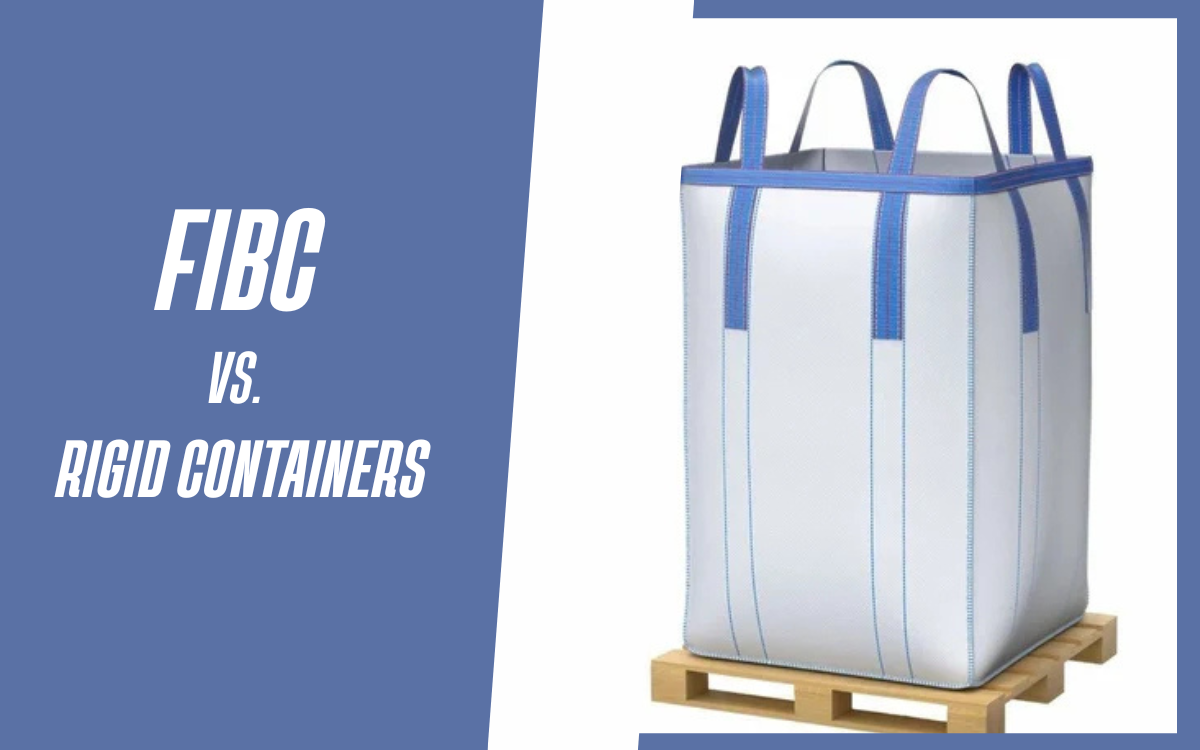
Flexible Intermediate Bulk Containers (FIBC) bags are large, industrial-grade woven polypropylene containers designed for storing and transporting dry, flowable materials in bulk. Commonly used across agriculture, construction, chemicals, and food processing, these bulk bags can safely handle loads ranging from 500 kg to over 2,000 kg.
Their lightweight, foldable structure reduces storage space, lowers freight costs, and simplifies handling with forklifts or cranes. From grains and fertilizers to cement and polymer resins, FIBCs provide a cost-efficient, scalable, and contamination-controlled packaging solution for modern supply chains across industries worldwide.
What Are Rigid Containers?
Rigid containers are strong, fixed-shape storage units made from materials like high-density polyethylene, steel, or composite plastic. They are designed to safely store and transport liquids, semi-solids, and sensitive dry materials over long distances.
Unlike flexible bulk bags, rigid Intermediate Bulk Containers (IBCs), drums, and tanks keep their shape, stack securely, and provide better protection against impact, moisture, and contamination. These containers are commonly used in chemicals, pharmaceuticals, food ingredients, and hazardous material handling where safety and product quality are critical.
Although they are heavier and cost more to store or return, rigid containers offer high durability, reusability, and reliable protection, making them suitable for applications where safety and compliance are more important than lightweight or space-saving packaging.
Cost Comparison: Initial Investment vs Long-Term Spend
The real cost difference between FIBC bags and rigid containers goes beyond the initial purchase price. It includes maintenance effort, cleaning needs, storage space, and replacement frequency over time. Flexible bulk bags help reduce upfront spending, minimize handling of empty units, and simplify operations.
Rigid containers, on the other hand, offer stronger structure and longer reuse where product protection is critical. The better option depends on shipment volume, material sensitivity, and available handling infrastructure rather than a single cost element.
Transportation & Space Efficiency
In logistics planning, weight, foldability, stacking ability, and warehouse usage play a major role in operational smoothness. FIBC bags support efficient high-volume dry transport through lighter construction and compact storage when empty. Rigid containers remain important where stability, containment strength, and regulated handling are required.
Reviewing transport distance, storage capacity, and workflow design helps businesses choose the packaging format that best supports efficient movement and consistent supply chain performance.
How to Choose the Right Bulk Packaging for Your Business?
Choosing the right bulk packaging for your business requires balancing product safety, logistics efficiency, regulatory compliance, and long-term cost control. Start by assessing the material you handle—dry, flowable goods often suit FIBC bags, while liquids, hazardous chemicals, or high-value ingredients demand rigid containers with certified protection.
Next, evaluate transport distance, handling frequency, and return logistics, since lightweight, collapsible solutions reduce freight and storage expenses, whereas durable rigid units support repeated reuse. Storage infrastructure, stacking needs, and automation compatibility should also guide the decision.
Consider sustainability goals as well, including recyclability, reuse cycles, and overall carbon impact across the supply chain. Finally, calculate total cost of ownership rather than unit price alone, factoring maintenance, labor, cleaning, and replacement timelines. A clear, data-driven comparison aligned with operational priorities will help businesses select bulk packaging that improves efficiency, protects product quality, and delivers measurable return on investment. This strategic choice strengthens resilience in competitive markets.
Conclusion:
Selecting between FIBC bags and rigid containers depends on product type, handling risks, transport distance, and total lifecycle economics. Flexible bulk bags deliver clear ROI advantages through lighter weight, reduced freight costs, faster loading, and minimal storage space for high-volume dry materials.
Rigid containers remain essential where structural strength, contamination control, and regulatory compliance are critical, especially for liquids or hazardous goods. For businesses aiming to improve bulk transport efficiency, Satyendra Packaging Ltd. (SPL) provides reliable, industry-proven FIBC solutions designed to balance safety, durability, and long-term cost performance. Evaluating operational priorities, sustainability goals, and return on investment together ensures smarter packaging decisions and stronger margins across evolving global supply chains.
Partnering with the right manufacturer also supports consistent quality, compliance assurance, and scalable supply, helping organizations stay competitive while controlling logistics costs in rapidly changing industrial and export environments over the coming years.
Recent Blogs
- What Is Masterbatch? Types, Advantages, and Role in Plastic Industry
- Ventilated Bulk Bags Explained: Design, Durability, and Real-World Applications
- Pinch Bottom Bags: Why Brands Are Switching to This Smart Packaging?
- The Rise of Flexible Packaging: What Manufacturers and Startups Must Know
- What Is PP Multifilament Yarn? Benefits, Uses, and Industry Applications
- Polypropylene (PP): Uses, Benefits, and Applications in Packaging Industry
- Leno Bags: A Stronger Packaging Backbone for India’s Farm Produce Market
- The Ultimate Guide to Choosing the Geotextile Fabric for Your Project
- Top 6 Best Packaging Materials for Bulk Goods: Strong & Sustainable
- What is Flexible Packaging? The Smart Choice for FMCG Export & Supply
- Complete Guide to FIBC Bags – Types, Uses, and Benefits You Should Know
- BOPP Laminated Woven Bags Benefits | Satyendra Packaging
- Innovative BOPP Film | Satyendra Packaging Ltd Manufacturing
- BOPP Pinch Bottom Bags | Reliable Custom Packaging
- BOPP Laminated PP Woven Sacks | Durable Custom Packaging
- Leno Bags for Fresh Produce – Breathable & Durable Packs
- PP Woven Fabric: Meaning, Properties & Applications Guide
- FIBC Jumbo Bags: Uses, Benefits & More | Satyendra Packaging
- Top 5 Benefits of Woven Geotextile Fabrics in Roads
- High-Quality BOPP Film Packaging | Satyendra Packaging India
- Are BOPP Films Safe for Food Packaging? | Satyendra Group
- Are FIBCs Recyclable? A Guide to Sustainable Bulk Bags
- BOPP/PP Block Bottom Bags: Types, Benefits & Industry Uses
- Why PP Multifilament Yarn is Essential for Multiple Industries
- Boost Your Business with BOPP Bags
- Knitted Geotextiles: Game-Changer in Civil Engineering Solutions
- How Flexible Packaging Solutions Help to Grow Business
- FIBC Bags: The Versatile Solution for Bulk Material Handling
- Types of Flexible Packaging and Their Advantages
- Reasons Why PP Leno Mesh Bags Are the Best Choice for Produce Packaging
- Why BOPP Laminated PP Woven Bags Are Right For Your Business?
- Woven Polypropylene Bags: The Complete Guide
- Exploring the Benefits of FIBC Bulk Bags: A Practical Guide